 United States
The First-Time Buyer's Checklist: Coil Type, Nicotine Strength, and Battery Life
This content is intended for adult vapers of legal purchasing age. Nicotine strength, coil resistance, and battery needs vary by user and device, so treat the ranges below as general starting points and follow the manufacturer's specifications.
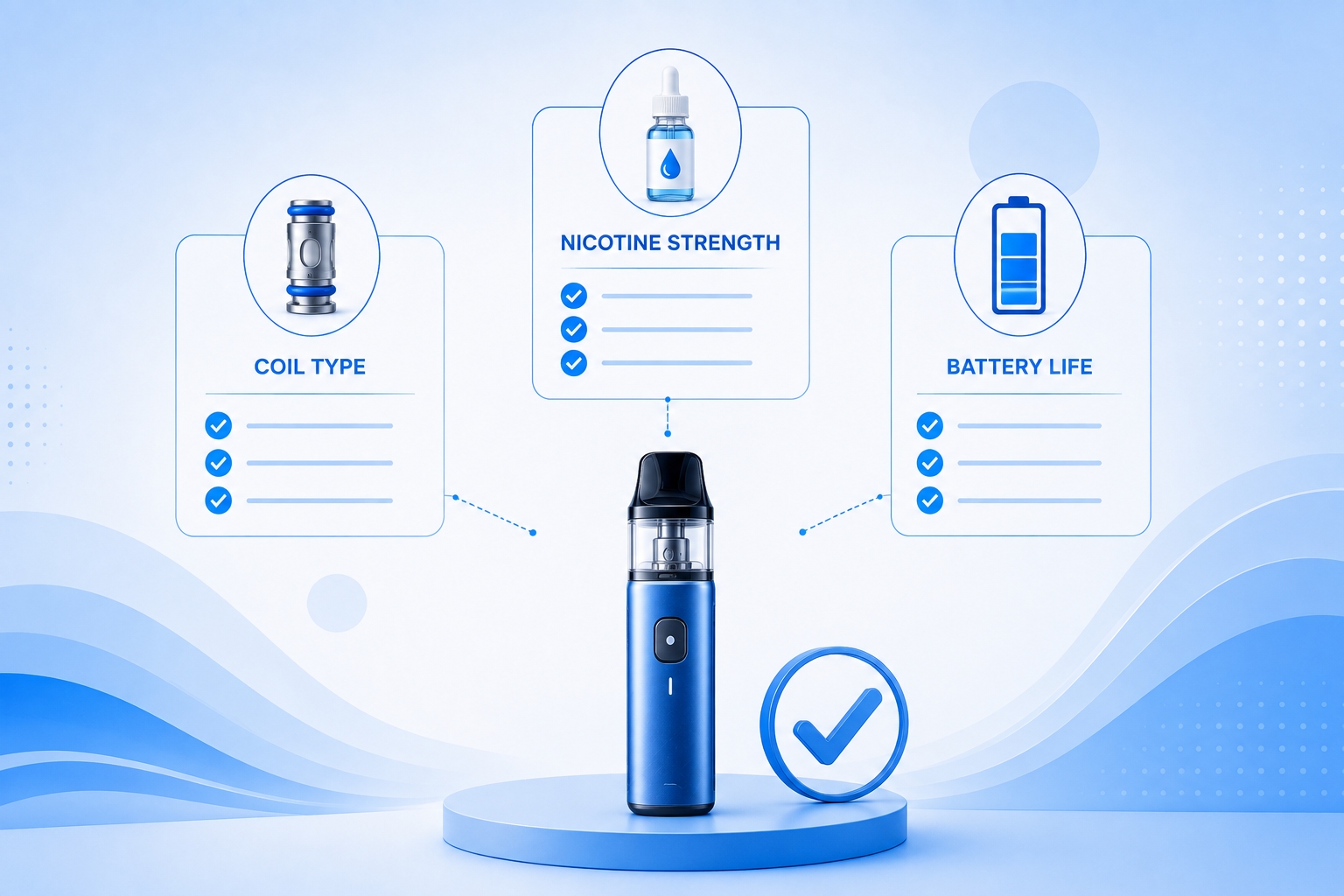
Most first-time vape purchases go wrong for one of three reasons: the wrong coil for the wrong draw style, the wrong nicotine strength for the person's habits, or a battery that can't get through the day. Get those three things right, and almost everything else — flavor, brand, price — is just preference.
Here's how to work through all three before you buy. If you're comparing complete setups, browsing starter kits can also help you compare the battery, coil, pod or tank, and charging setup together instead of looking at each specification in isolation.
Coil Type: MTL vs. DTL
Coils determine airflow, draw style, and how the device actually feels to use. Getting this wrong is one of the main reasons a new setup may not feel comfortable or familiar.
MTL (Mouth-to-Lung): Air is drawn into your mouth first, then inhaled into your lungs — similar to the motion used when smoking a cigarette. It generally uses a tighter draw, higher-resistance coil, and lower vapor output.
Best for: people switching from cigarettes, anyone who prefers a tighter draw, and users who want lower e-liquid consumption.
DTL (Direct-to-Lung): Vapor is inhaled directly into the lungs in one motion. It generally uses a looser airflow, lower-resistance coil, and produces more vapor.
Best for: experienced users who prefer an airier draw, larger vapor production, and higher-VG e-liquid.
Some devices support more than one draw style. The Uwell Crown D Pod Kit, for example, includes different coil resistances intended for DTL and MTL/RDL use, which shows why the installed coil matters as much as the device itself when choosing a draw style.
Quick rule: If you're coming from cigarettes and aren't sure which draw style you prefer, MTL is usually the more familiar starting point.
Nicotine Strength: Match It to Your Actual Habit, Not a Guess
This is one of the easiest parts to get wrong — too little nicotine may feel unsatisfying, while too much can cause an unpleasantly harsh experience or unwanted effects.
| Smoking Habit | Suggested Nic Salt Strength | Suggested Freebase Strength |
|---|---|---|
| Light smoker (under 10/day) | 20mg | 3–6mg |
| Moderate smoker (10–20/day) | 25–35mg | 6–12mg |
| Heavy smoker (a pack+/day) | 35–50mg | 12–18mg |
| Non-smoker / very light social smoker | Consider 0mg or lowest available | 0–3mg |
Nic salts vs. freebase, quickly:
- Nic salts are typically smoother at higher concentrations and are commonly paired with lower-powered MTL pod systems.
- Freebase nicotine generally produces more throat sensation at higher strengths, which is why it is commonly used at lower concentrations.
If you're between two strengths, starting lower is the more conservative approach. Cigarette count can provide context, but it isn't an exact nicotine conversion.
Battery Life: Match It to How Often You Actually Vape
Battery capacity is measured in mAh. Higher capacity generally means more potential use between charges, although actual battery life also depends on wattage, coil resistance, draw frequency, and device efficiency.
| Usage Level | Recommended Battery | What That Looks Like Day-to-Day |
|---|---|---|
| Occasional / social use | 300–500mAh | Suitable for lighter use, with charging needs depending on wattage and frequency |
| Regular daily use | 650–1000mAh | More capacity for regular use between charges |
| Heavy daily use | 1000mAh+ or replaceable battery | Better suited to frequent use or higher-output settings |
Two extra things worth checking:
- Charging speed and port: Check whether the device uses USB-C and what charging rate the manufacturer specifies.
- Replaceable vs. built-in battery: Replaceable batteries can be swapped when depleted, while built-in batteries require the device itself to be recharged.
The Full Checklist
Before choosing a device, confirm you've checked:
- [✓] Coil type matches your draw preference — MTL for a tighter draw, DTL for a more open draw.
- [✓] Nicotine strength fits your previous nicotine use — with nic salt vs. freebase considered.
- [✓] Battery capacity fits your expected usage and power level.
- [✓] Replacement parts are available for the specific device. Checking compatible replacement coils before choosing a kit can help prevent compatibility problems later.
- [✓] Charging cable and port work for how and where you expect to charge.
- [✓] The device format fits your maintenance preference — refillable pod, tank-based kit, or another setup.
Bottom Line
Coil type, nicotine strength, and battery capacity work together. A suitable coil with the wrong nicotine strength can still feel unsatisfying, while the right nicotine level in a device that doesn't match your usage pattern can become inconvenient.
Start by matching the draw style, nicotine format, and battery capacity to your actual habits. Once those basics are right, factors like flavor, appearance, and additional features become much easier to compare.
Nicotine strength limits and product availability vary by country and region. If nicotine causes dizziness, nausea, headache, or other unwanted effects, stop use and seek appropriate medical advice.