 United States
What Is a 510 Connection? Vape Threads and Compatibility Explained
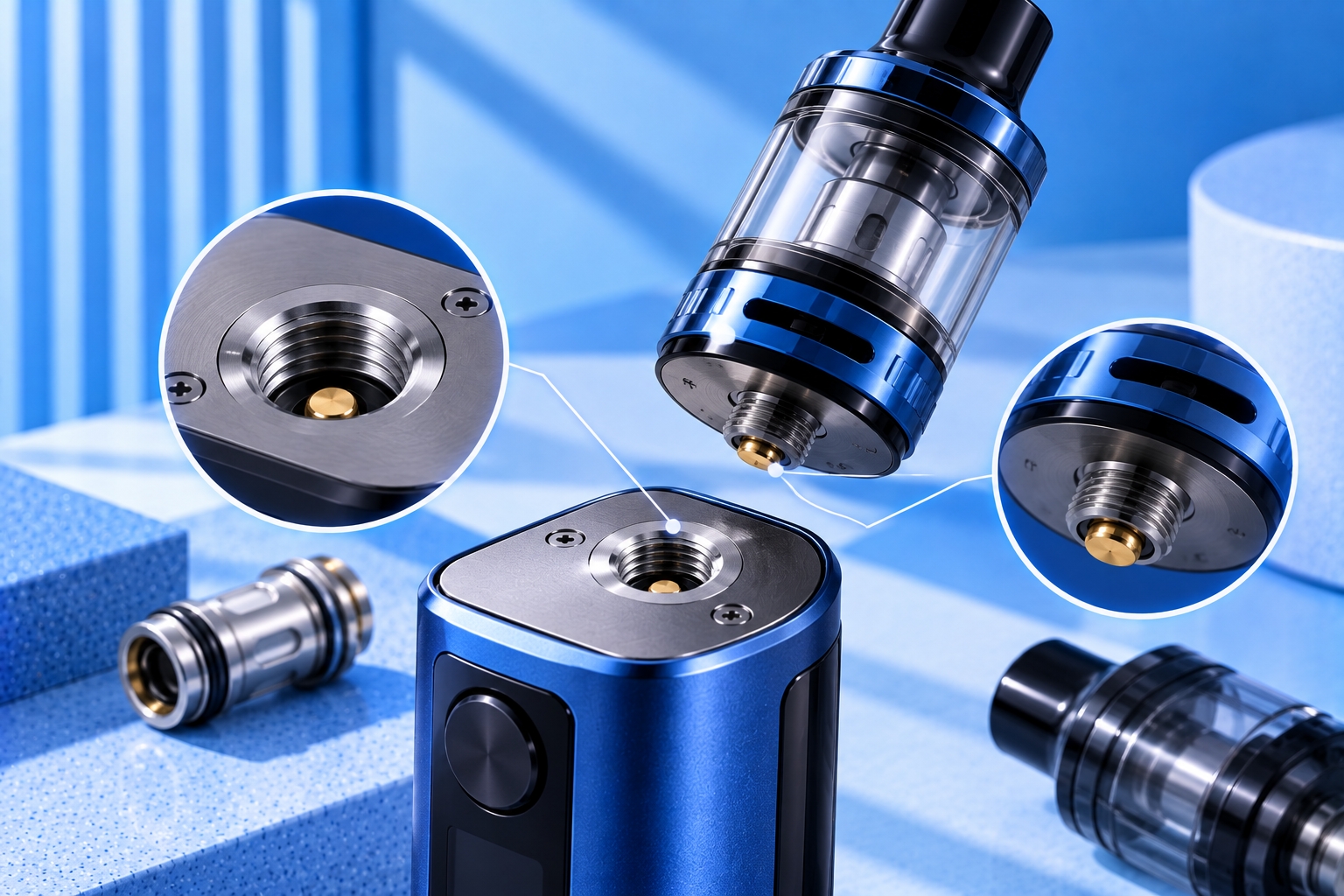
A 510 connection is a common threaded interface used by many vape tanks and devices. Matching 510 threads can establish a physical connection, but they do not automatically confirm that every tank and device are fully compatible. Always check the manufacturer's specifications for the exact hardware being used.
If you have looked at the bottom of a vape tank or the top of a vape mod, you may have come across the term “510 connection.” It refers to a common threaded interface used to attach many traditional tanks and atomizers to compatible devices.
The 510 connection helps create both the physical attachment and electrical interface between the tank and device. However, “510 compatible” does not mean that every tank with 510 threading is automatically suitable for every device with a 510 connector.
Understanding what the connector does—and what it does not tell you—makes terms such as 510 thread, 510 tank, and 510-compatible device much easier to interpret.
What Is a 510 Connection on a Vape?
A 510 connection is a threaded interface commonly found between a vape tank or atomizer and a compatible vape device or mod.
On a typical setup, the tank screws into the connector located at the top of the device. This secures the components mechanically while allowing the appropriate electrical contacts to meet.
Manufacturer documentation commonly refers to 510 as a standard tank connection. For example, Innokin describes the 510 connection as standard threading used by many vaporizers and tanks, while Vaporesso lists “510 Thread” as the tank connection on devices such as the GTX ONE.
What Does “510 Thread” Mean?
In vape terminology, “510 thread” generally refers to the threaded connector format used to join compatible atomizers and devices.
You may therefore see products described as a 510 tank, 510-threaded tank, 510 mod, or 510-compatible device. These descriptions identify the type of connection rather than guaranteeing complete compatibility between any two products carrying the term.
Where Is the 510 Connection Located?
On many traditional vape mods, the 510 connector is located on the top of the device. The corresponding threaded connection is found at the base of the tank or atomizer.
When the tank is installed, these two areas come together to form the mechanical and electrical interface between the hardware.
The connector is only one part of the complete tank assembly. Components such as the reservoir, coil, airflow system, seals, base, and mouthpiece serve different functions within the tank. Vape.com's vape tank anatomy guide separates those components and explains their individual roles.
What Parts Make Up a 510 Connection?
Although exact construction varies by manufacturer and device, a typical 510 interface includes a threaded outer section and a center electrical contact separated by insulating material.
Threaded Connection
The threaded section physically secures the atomizer to the device. The tank should normally screw into a compatible connector smoothly without needing excessive force.
Center Contact
The center contact forms part of the electrical connection between the device and attached atomizer. When the hardware is assembled correctly, the relevant contacts must meet properly for a regulated device to recognize and operate the attached atomizer.
Insulation
Insulating material separates conductive parts of the connector that should remain electrically isolated from each other. The exact connector construction and materials vary between products.
What Is a Spring-Loaded 510 Connection?
Some vape devices use a spring-loaded center contact within the 510 connector. This design allows a limited amount of movement so the contact can accommodate compatible atomizers with small differences in their connection dimensions.
A spring-loaded connection should not be treated as a way to make otherwise incompatible hardware fit. Its purpose and permitted movement depend on the device design.
Avoid prying, bending, or modifying a center contact to force a tank to connect. If a connector appears damaged, unusually recessed, loose, or stuck, follow the manufacturer's instructions for that device.
Is Every Vape Tank a 510 Tank?
No. The 510 format is common among traditional tanks and mods, but it is not the connection used by every vaping device.
Pod systems often use proprietary connections designed around a specific device or product family. These systems may use magnets, dedicated contacts, pressure-fit designs, or other connection arrangements rather than conventional 510 threading.
This distinction is important because a pod designed for a proprietary bay should not be assumed to attach to a standard 510 connector simply because both systems provide an electrical connection.
510 Connection vs. Pod Connection
| Feature | 510 Connection | Proprietary Pod Connection |
|---|---|---|
| Attachment | Typically threaded | Varies by system |
| Typical hardware | Traditional tanks and atomizers | Pods and cartridges |
| Interchangeability | Can support multiple compatible 510 components | Usually tied to specific device families |
| Compatibility | Still depends on device and tank specifications | Depends on manufacturer-listed pod/device compatibility |
This is a connection-design comparison only. Proprietary pod systems vary significantly, and magnetic pod hardware is a separate connection type with its own design considerations.
What Does “510 Compatible” Mean?
In its simplest sense, “510 compatible” indicates that hardware uses or supports the 510 connection format. For example, a tank with a 510 connector can physically attach to a device designed to accept compatible 510 atomizers.
However, the connection type describes the interface—not the complete operating requirements of the hardware.
Two components can share a 510 connection while still differing in tank diameter, installed coil resistance, required operating power, supported resistance range, and manufacturer specifications.
Does a 510 Connection Mean Any Tank Will Fit?
Not necessarily. Matching 510 threading establishes a common connection type, but physical and electrical considerations still apply.
For example, a tank may use the correct threading but be wider than the top surface of a particular device. Another tank may screw into place correctly while its installed coil operates outside the specifications supported by that device.
This is where the 510 topic ends and broader hardware compatibility begins. Vape.com's vape compatibility guide covers the complete process for checking device model, tank, pod, coil, resistance, physical dimensions, and manufacturer-listed compatibility.
Does Tank Diameter Matter With a 510 Connection?
Yes. A tank can have the correct 510 threading while still being physically wider than the area available on a particular device.
Depending on the combination, a wider tank may extend beyond the edge of the device or encounter another part of the hardware. This is why dimensions should be checked separately from the connection type.
Manufacturer specifications commonly provide tank and device dimensions, making them more useful than assuming that matching threads guarantee a flush physical fit.
Does Coil Resistance Matter With a 510 Tank?
Yes, but coil resistance is a separate compatibility factor from the 510 connector itself.
The 510 connection determines how the tank interfaces with the device. The installed coil determines part of the electrical load that the regulated device detects. A device may support only a specified resistance range, while the coil may also have a manufacturer-recommended operating range.
This means a tank physically attaching through a 510 connection is not enough by itself to establish that its installed coil is appropriate for the device.
What Is a 510 Adapter?
A 510 adapter allows certain devices that do not normally use a conventional 510 tank connection to accept compatible 510 hardware.
Adapters are device-specific. Their availability should not be interpreted as evidence that every pod device can be converted to use a 510 tank.
For example, Innokin documents a separate magnetic 510 connector adapter for the Kroma-Z, whose default pod bay is not itself compatible with 510-connected hardware.
Is a 510 Connection the Same as a 510 Drip Tip?
No. These terms refer to different parts of vape hardware.
A 510 connection refers to the interface between an atomizer or tank and a compatible device. A 510 drip tip refers to a mouthpiece format used on certain tanks and atomizers.
A product having a 510 drip tip does not tell you what connection it uses at the bottom of the tank, and a 510 tank connection does not automatically identify its mouthpiece size.
Can Dirt or E-Liquid Affect a 510 Connection?
Yes. Because the connector depends on suitable electrical contact, debris, condensation, or e-liquid around the connection area can interfere with contact between the tank and device.
Manufacturer support guidance commonly recommends keeping the 510 connection area clean and checking that the connector and contacts are undamaged.
This article does not cover full atomizer-error diagnosis because failure to detect an otherwise compatible tank is a troubleshooting issue rather than a question about what 510 threading means.
Can 510 Threads Be Damaged?
Yes. Threads and contacts can be damaged through wear, cross-threading, excessive force, impact, or other physical damage.
When attaching a tank, it should normally thread into place without being forced. Manufacturer support guidance also warns against overtightening tanks onto 510 connectors.
If the threads appear damaged or the tank cannot be installed normally, stop rather than forcing the connection. Damaged electrical contacts or connectors should be handled according to the manufacturer's service guidance.
How Do You Know Whether a Vape Uses a 510 Connection?
The most reliable approach is to check the specifications or manual for the exact device or tank model. Look for terminology such as 510 connection, 510 connector, 510 thread, or 510 threaded.
Do not rely only on appearance. Devices from the same manufacturer can use very different connection systems, particularly when comparing traditional mods with pod systems.
Quick Guide to 510 Terminology
| Term | What It Generally Means |
|---|---|
| 510 connection | Common threaded interface between many tanks/atomizers and devices |
| 510 thread | The threaded connection format used by compatible hardware |
| 510 tank | A tank designed to use a 510 connection |
| 510 mod/device | A device designed to accept compatible 510 atomizers |
| 510 adapter | Device-specific adapter that can provide a 510 interface on supported hardware |
| 510 drip tip | A mouthpiece format; not the tank-to-device 510 connection |
Does a 510 Connection Guarantee Compatibility?
No. A 510 connection tells you that two components may share a common physical interface. It does not independently confirm that the entire setup is appropriate.
Complete compatibility can still depend on the exact tank and device, physical dimensions, installed coil, resistance range, operating requirements, and manufacturer specifications.
Think of the 510 connection as one compatibility checkpoint rather than the complete compatibility test.
Final Thoughts
A 510 connection is the common threaded interface that allows many traditional vape tanks and atomizers to attach to compatible devices. The threads provide the physical attachment, while the connector also includes the electrical contact needed between the atomizer and device.
The most important distinction is that 510 connection does not mean universal compatibility. Matching threads tell you how two components connect; they do not tell you everything about whether those components should operate together.
For that reason, identify the connection type first, then use the manufacturer's specifications when determining whether a particular tank and device are intended to work together.
Sources & Further Reading
- Innokin Support — MVP5: 510 Connector Information
- Innokin Support — Vape Parts: Atomiser, Tank & Pod
- Innokin Support — Kroma-Z: 510 Adapter Information
- Vaporesso — GTX ONE User Manual
510 connection designs and device specifications vary by manufacturer and model. Do not force a tank into a connector, modify electrical contacts to create a fit, or assume that matching threads establish full compatibility. Confirm the specifications for the exact tank, coil, and device before use.