 United States
Top-Fill vs. Side-Fill Vape Pods: What’s the Difference?
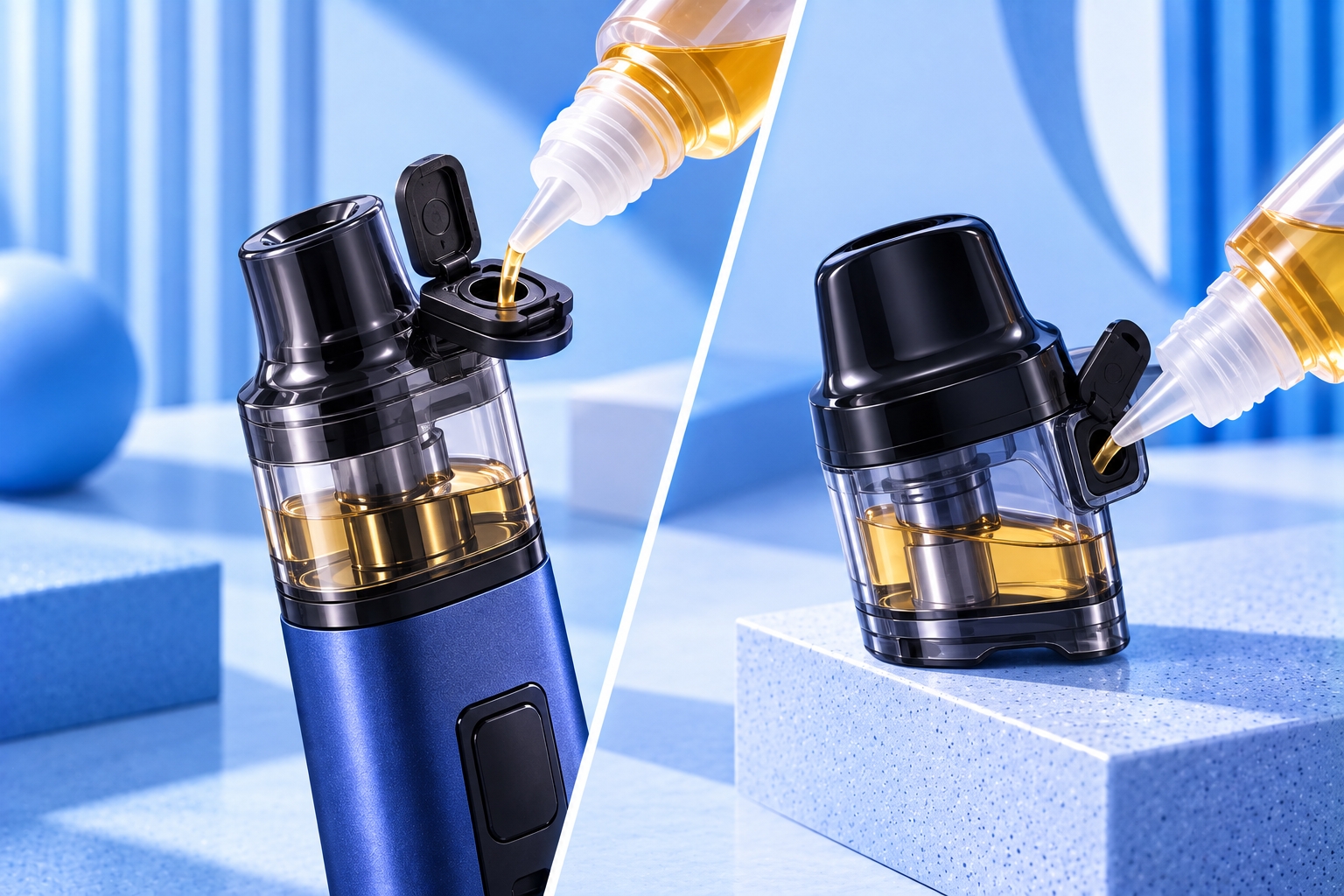
Pod filling systems vary by device and manufacturer. Always follow the instructions for your specific pod, avoid overfilling, and make sure any fill-port seal is fully closed before using the device.
Top-fill and side-fill vape pods mainly differ in where you access the e-liquid fill port. A top-fill pod places the filling access toward the top of the cartridge, while a side-fill pod typically uses a sealed port positioned along the side.
That sounds like a small design difference, but it can affect how much of the pod you need to remove, how easily you can reach the fill port, and how convenient refilling feels during everyday use.
Neither design is automatically better for every user. The more useful comparison is how each system works and which filling style fits your device and routine.
What Is a Top-Fill Vape Pod?
A top-fill vape pod provides access to its filling port from or near the upper portion of the cartridge. Depending on the design, you may open a cap, lift a silicone seal, slide or remove a top section, or expose a dedicated filling opening near the mouthpiece.
Some top-fill systems allow the pod to remain installed in the device during refilling, while others still require removal. The term top-fill describes the location or access method of the fill system, not one universal pod construction.
What Is a Side-Fill Vape Pod?
A side-fill pod places its filling port along the side of the cartridge. Many designs protect the opening with a silicone or rubber plug that must be lifted before e-liquid is added and securely reseated afterward.
Side-fill cartridges often need to be removed from the device to reach the port, although the exact arrangement depends on the pod system.
The position of the fill port does not determine whether a cartridge uses an integrated coil or a replaceable coil. Those are separate aspects of pod design.
Top-Fill vs. Side-Fill Pods at a Glance
| Feature | Top-Fill Pod | Side-Fill Pod |
|---|---|---|
| Fill-port location | At or near the top | Along the side |
| Pod removal | May not be required on some designs | Often required, depending on design |
| Port closure | Cap, seal, sliding section, or other mechanism | Commonly a silicone or rubber plug |
| Refill access | Usually accessible from above | Accessible from the cartridge side |
| Compatibility | Device-specific | Device-specific |
The Main Advantage of Top-Fill Pods
The main practical advantage of many top-fill designs is easier access to the filling area. When the port can be opened without removing the cartridge, refilling involves fewer steps.
This can also reduce how often the pod itself needs to be pulled from and reinserted into the device solely for refilling.
However, not every top-fill cartridge works this way. Some still need to be removed or have a mouthpiece or cover opened before the fill port becomes accessible.
The Main Advantage of Side-Fill Pods
Side-fill systems use a straightforward design that is common across many refillable pod platforms. Once the cartridge is removed and the fill-port plug is opened, the filling opening is usually easy to identify.
Because the filling mechanism is positioned on the cartridge body, the mouthpiece itself may not need to function as part of the refill system.
The tradeoff is that users may need to remove the pod each time they refill, depending on where the port sits relative to the device.
Does Top-Fill Mean Leak-Proof?
No filling position makes a pod completely leak-proof. Leakage depends on more than whether the fill port is located at the top or side.
A poorly closed fill-port seal, damaged cartridge, worn seal, incorrect filling technique, condensation, or other device-specific issues can contribute to unwanted liquid around a pod.
Top-fill designs may position the refill opening farther from areas where liquid commonly collects, but that alone does not guarantee that a pod will never leak.
Can Side-Fill Pods Leak From the Fill Port?
They can if the fill-port plug is not seated correctly or if the seal becomes damaged. After filling, press the plug completely back into its intended position and check that it sits evenly against the cartridge.
A loose, torn, stretched, or damaged plug may no longer seal as intended. If the fill-port closure is damaged, follow the manufacturer's guidance on replacing the cartridge rather than attempting an improvised repair.
Filling Technique Matters With Both Designs
Regardless of fill-port location, the manufacturer's filling instructions should take priority. Pod designs differ in where liquid should be added and how much space should remain inside the cartridge.
Do not accidentally pour e-liquid into the central airflow or chimney opening when the cartridge has a separate fill port. After refilling, close the fill mechanism completely and wipe away any liquid left on the outside of the pod before reinstalling it.
If the pod uses a new coil or newly saturated wick, follow the manufacturer's recommended preparation instructions before use.
Does the Fill Style Affect Pod Compatibility?
Top-fill and side-fill are design descriptions, not compatibility standards. Two cartridges being top-fill does not mean they are interchangeable, and the same applies to two side-fill cartridges.
Compatibility can depend on the exact device model, cartridge family, physical dimensions, contacts, magnets, coil system, and other manufacturer-specific requirements.
Before buying a replacement cartridge, confirm the exact device model and use the manufacturer's listed compatibility rather than choosing a pod based on its filling style. Vape.com's compatibility guide covers the broader checks used when matching replacement hardware to a device.
Does Fill Style Affect When a Pod Needs Replacing?
Not by itself. A pod does not necessarily need replacement simply because it uses a top-fill or side-fill design.
Replacement depends on the cartridge construction and its condition. For pods with integrated coils, declining coil or wick performance can mean replacing the entire cartridge. Other systems allow the coil to be replaced separately.
Physical damage, persistent seal problems, or other manufacturer-defined replacement conditions can also matter. Vape.com's pod replacement guide focuses specifically on determining when the cartridge itself may be due for replacement.
Which Filling Style Is Easier to Use?
For users who prioritize quick refill access, a top-fill design that can be opened while the cartridge remains installed may be more convenient. A side-fill design adds the step of removing the cartridge when the port cannot be reached while installed.
Ease of use still depends heavily on the individual cartridge. The size of the fill opening, type of closure, bottle-tip access, pod shape, and visibility of the e-liquid level can matter as much as the location of the port.
For that reason, “top-fill” should not automatically be interpreted as easier in every device.
What Should You Check Before Choosing a Pod?
Start with compatibility rather than fill-port preference. The cartridge needs to be designed for the device you own before convenience becomes relevant.
Once compatibility is confirmed, compare how the fill port opens, whether the pod must be removed, how easy the e-liquid level is to see, whether the coil is integrated or replaceable, and how the manufacturer recommends filling the cartridge.
If you are unsure which device version you have, identifying the exact vape model first can prevent confusion between similar-looking cartridges from the same product family.
Final Thoughts
The difference between top-fill and side-fill vape pods comes down primarily to where and how the cartridge provides access for refilling. Top-fill designs place that access near the upper portion of the pod, while side-fill systems position it along the cartridge body.
Top-fill designs can reduce the number of steps involved when the cartridge can remain installed. Side-fill pods use a familiar and straightforward fill-port arrangement, although removal of the cartridge is often necessary.
Neither filling style determines compatibility, coil type, or whether a pod will leak. Those characteristics depend on the specific cartridge and device design, so the manufacturer's instructions and compatibility information should remain the primary reference.
Sources & Further Reading
- Vaporesso — Vape FAQ & Product Support
- UWELL — Official Product Information
- Geekvape — Official Product Information
Always use a pod designed for your specific device and follow its filling instructions. Do not force a cartridge into a device because it appears similar to another pod or uses the same filling style.