 United States
Vape USB-C Charging Specifications: Current Limits and Device Support
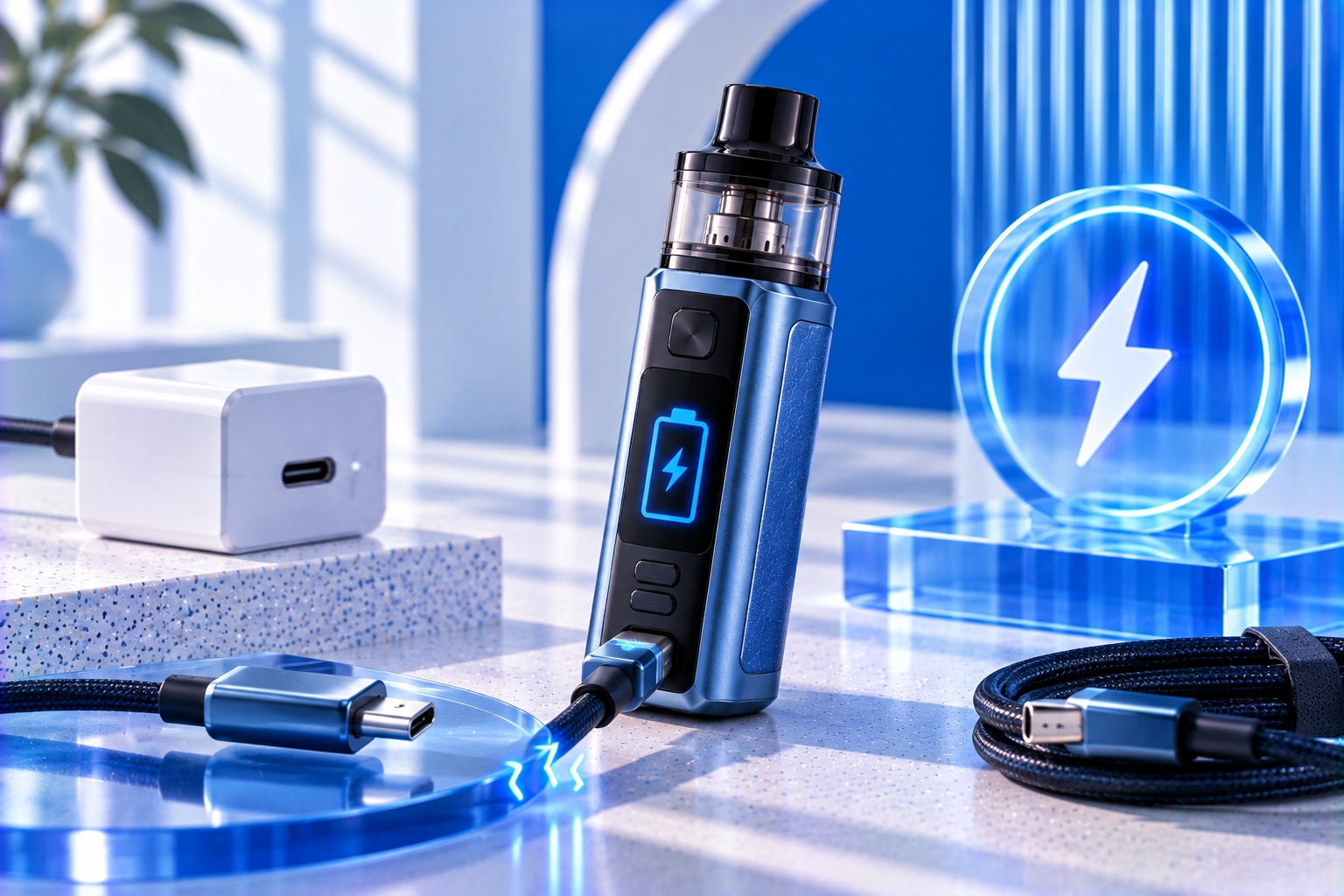
Technical Note: A USB-C connector does not automatically indicate support for USB Power Delivery, fast charging, or a particular charging current. Charging behavior depends on the device's circuitry, supported protocols, power source, and manufacturer specifications.
USB-C is a common charging connection on modern electronic devices, including certain vape systems. Its reversible connector makes charging convenient, but the connector alone does not establish how much power a device can safely accept.
Two vape devices may use USB-C ports while supporting different input voltages, charging currents, and power-management behavior.
Understanding vape USB-C charging specifications helps explain how charging compatibility works and why manufacturer documentation is more important than connector appearance.
USB-C Charging Specifications Explained
USB Type-C is a connector and cable standard developed by the USB Implementers Forum. It defines physical and electrical interface requirements, but the presence of a USB-C connector does not guarantee support for every optional USB feature.
For vape devices, relevant charging characteristics may include:
- Supported input voltage
- Maximum charging current
- Charging-control circuitry
- Supported charging protocols
- Cable and power-source requirements
These specifications vary by manufacturer and device model.
USB-C Connector Type vs. Charging Capability
The connector is only one part of a charging system. A vape may use a USB-C port while relying on relatively simple charging electronics, whereas another device may support a different charging arrangement.
It is important to distinguish between the physical USB-C connection and the device's actual charging capabilities. USB-C compatibility does not mean every device supports identical charging speeds or power input.
Understanding Input Voltage and Charging Current
Input Voltage
Input voltage describes the electrical potential supplied to the device's charging input. A manufacturer's specification may identify a supported voltage, such as 5 V, but this must be confirmed for the particular model.
Users should not assume a device supports higher-voltage charging modes simply because it has a USB-C port.
Input Current
Charging current is measured in amperes (A). A device's specified input current helps describe the current its charging system is designed to accept under supported conditions.
For example, a hypothetical device rated at 5 V and 1 A has a nominal input power of 5 W.
Charging Power
Electrical power is commonly expressed in watts (W), using the relationship:
Power (W) = Voltage (V) × Current (A)
This calculation represents electrical input power at the specified values. It does not establish battery charging power, charging efficiency, or the time required for a full charge.
Actual charging behavior may change during a charging session because of battery condition, temperature, and charging-control decisions.
USB Power Delivery and Vape Devices
USB Power Delivery, commonly called USB PD, is a separate power-negotiation specification that can operate over compatible USB connections.
However, not every USB-C vape device supports USB PD. A device may charge through standard USB power arrangements without implementing optional higher-power modes.
Manufacturers must explicitly document supported charging features. Users should not infer USB PD compatibility from the connector alone.
Charging Cable Compatibility
USB-C cables can differ in their supported capabilities and construction. A suitable cable must meet the requirements of both the device and its charging setup.
For vape devices, the safest approach is to use the supplied cable when provided or follow the manufacturer's recommendations for replacement cables.
A physically compatible connector is necessary, but it is not sufficient to confirm the suitability of the entire charging setup.
Charging Adapter Compatibility
A charging adapter's advertised maximum wattage does not necessarily represent the power a connected device will receive. Actual power delivery depends on the adapter, device, supported protocols, and charging-control system.
Users should not assume every high-output adapter is suitable for every vape device. Always follow the manufacturer's specified charging requirements and avoid unsupported charging arrangements.
USB-C Charging and Internal Battery Protection
Modern rechargeable devices may include electronic protections that manage charging conditions. Depending on the model, these may involve:
- Charging current control
- Battery voltage monitoring
- Temperature monitoring
- Charging termination
- Fault detection
The presence and implementation of these features vary between models. A USB-C connector itself does not provide battery protection; these functions depend on the device's electronics and design.
These protections are part of broader vape chipset technology and device power-management systems, but the exact features must be confirmed through the manufacturer's documentation.
Understanding Manufacturer Charging Specifications
When reviewing a vape device's technical specifications, look for documented information such as:
| Specification | What It Describes |
|---|---|
| Charging connector | Physical port type, such as USB-C |
| Input voltage | Supported charging input voltage |
| Input current | Rated or maximum supported input current |
| Charging protocol | Supported charging or power-negotiation method, if specified |
| Battery capacity | Battery capacity, commonly expressed in mAh |
| Charging instructions | Manufacturer requirements and safety precautions |
Battery capacity alone cannot determine charging time. Actual charging duration also depends on charging current, efficiency, battery condition, and charging-control behavior.
Common Misunderstandings About USB-C Charging
USB-C Always Means Fast Charging
Not necessarily. USB-C identifies a connector type, not a guaranteed charging speed.
A Higher-Wattage Charger Always Charges Faster
Not necessarily. Charging power is constrained by the device's supported charging behavior and compatible power arrangements.
Every USB-C Cable Provides Identical Performance
No. Cable capabilities and quality can vary.
USB-C Devices Automatically Support USB Power Delivery
No. USB PD support must be established through the relevant device specifications.
Final Thoughts
USB-C provides a convenient, widely used charging connection, but vape USB-C charging specifications depend on more than the connector.
Input voltage, charging current, cable capability, power-source compatibility, and internal charging electronics all influence how a device receives power.
For accurate compatibility information, rely on the manufacturer's official technical specifications and charging instructions rather than assuming that all USB-C vape devices operate identically.
Charging Reminder: USB-C connector compatibility does not guarantee support for every charging protocol or power source. Follow the manufacturer's recommended charging setup and discontinue use if the device or charging accessories show signs of damage or overheating.
Sources & Further Reading
- USB Implementers Forum – USB Type-C Information
- USB Implementers Forum – USB Power Delivery
- U.S. Food and Drug Administration – Vape Battery Safety
- Device manufacturer's official charging specifications and user manual for model-specific requirements.