 United States

Why Does My Vape Say “Low Resistance”? Causes and Safe Troubleshooting
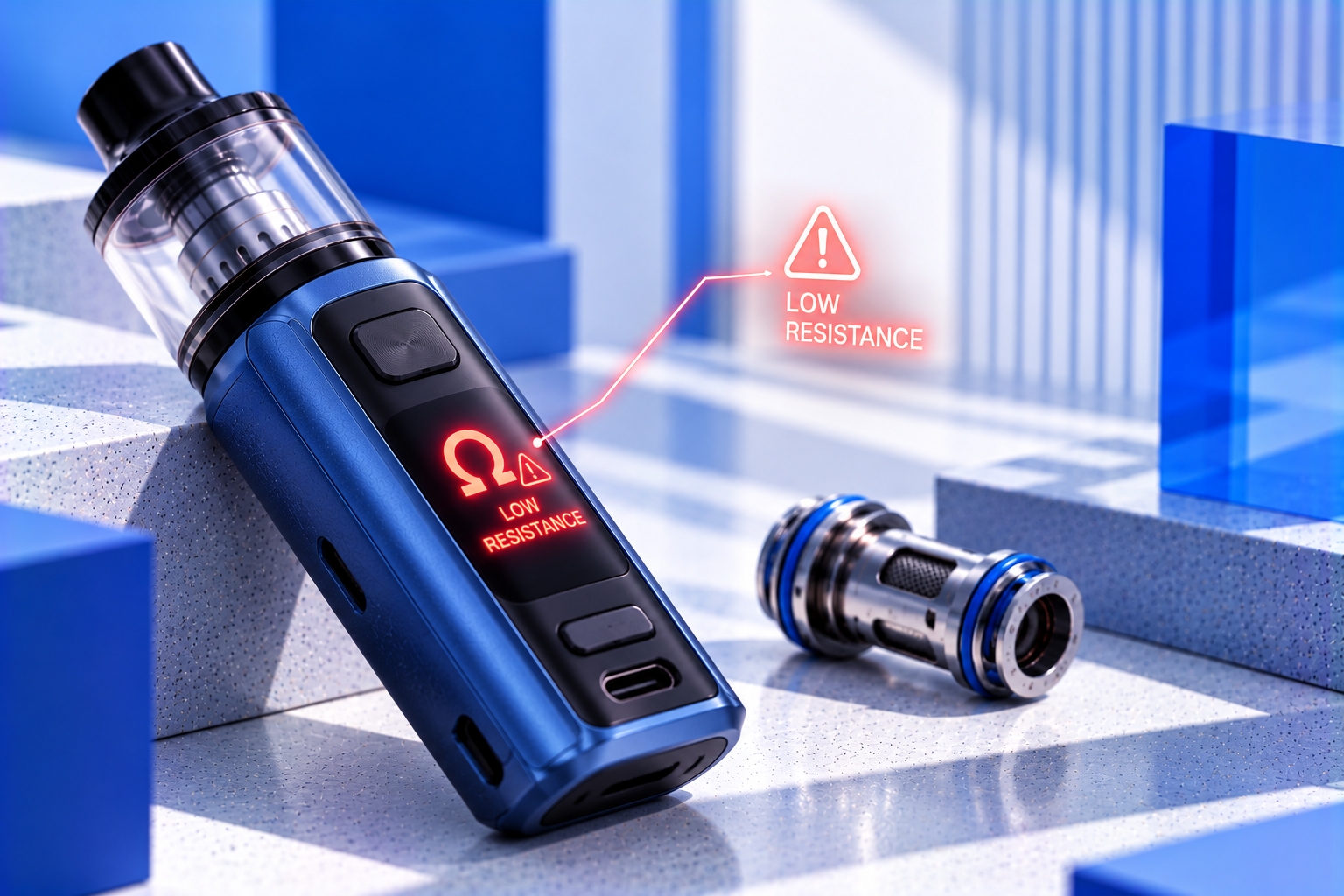
A low resistance warning can appear when a regulated vape device detects an electrical resistance reading below its supported operating range. Depending on the manufacturer, the screen may display messages such as "Low Resistance," "Ohms Too Low," or another model-specific warning.
The message does not always mean the coil is defective. It may involve coil compatibility, connection problems, or an electrical fault. Understanding the warning helps users recognize when to stop using the device and when manufacturer-supported troubleshooting is appropriate.
What a Low Resistance Warning Means
Electrical resistance is measured in ohms (Ω). In a vape device, the resistance of the installed coil is one factor the control system uses when determining whether the atomizer is operating within supported limits.
Regulated devices typically have manufacturer-defined resistance ranges. If the measured resistance falls below the minimum supported value, the device may prevent activation and display a warning.
The minimum supported resistance differs between devices and operating modes. A resistance reading that is supported by one model may be outside the permitted range of another. For background on resistance and electrical limits, the guide to Ohm's Law basics explains the underlying concepts.
Common Causes of a Vape Low Resistance Warning
1. Coil Resistance Below the Device's Supported Range
A coil with resistance below the manufacturer's minimum specification may trigger a warning even if the coil itself is functioning as designed. Device compatibility must be confirmed before installing replacement components.
2. Damaged or Defective Coil
An internal coil fault may produce an abnormal resistance reading. Physical damage, manufacturing defects, or deterioration can affect electrical behavior. A coil that repeatedly triggers warnings should not be forced into operation.
3. Short Circuit or Electrical Contact Problem
An unintended electrical connection can cause the device to detect unusually low resistance. Potential sources include damaged insulation, misaligned components, or faults in the atomizer assembly. These conditions may require manufacturer assessment.
4. Incompatible Replacement Components
Coils, tanks, and replacement parts are not universally compatible. Similar-looking components may have different electrical specifications. The device's supported resistance range and manufacturer-approved parts list should guide compatibility decisions.
5. Moisture or Contamination Around Electrical Contacts
Liquid exposure or contamination near electrical contacts can interfere with normal operation. If moisture has entered the device or internal electronics may be affected, stop using and charging it. Avoid opening the housing or attempting internal repairs.
Low Resistance Warning: Symptoms and Possible Causes
| Observed Symptom | Possible Explanation | Recommended Response |
|---|---|---|
| Warning after installing a new coil | Incompatible resistance or defective component | Verify the approved coil specifications |
| Resistance reading suddenly drops | Coil damage or electrical fault | Stop use and seek manufacturer guidance |
| Warning after a drop | Possible mechanical or electrical damage | Inspect externally and avoid further activation |
| Warning with visible leakage | Possible contamination or liquid intrusion | Stop using and charging until assessed |
| Repeated warning with approved components | Possible atomizer or device electronics fault | Contact manufacturer support |
Safe Troubleshooting for a Low Resistance Warning
Step 1: Stop Activating the Device
Do not repeatedly press the firing button or attempt to override the warning. A protective message should be treated as a reason to pause operation until compatibility or device condition can be assessed.
Step 2: Identify the Exact Device and Coil Model
Find the device model and installed coil specification in the manufacturer's documentation. Compare the coil's rated resistance with the device's supported operating range, including any mode-specific limitations.
Step 3: Inspect Accessible Components Externally
With the device switched off where possible, look for visible damage, leakage, or improperly seated user-replaceable components. Do not insert metal tools into electrical contacts, manipulate connector pins, or open sealed electronics.
Step 4: Follow Manufacturer-Approved Component Guidance
If the manufacturer documents a safe method for checking or replacing a user-serviceable coil, follow those instructions exactly. Do not substitute unapproved components or modify the coil to change its resistance.
Step 5: Contact Manufacturer Support if the Warning Persists
Persistent warnings with compatible components may indicate a fault that cannot be identified safely through basic inspection. Manufacturer support can advise whether the atomizer or device requires service or replacement.
Low Resistance vs. No Atomizer vs. Atomizer Short
These warnings can involve related electrical components, but they do not always indicate the same fault. Their exact meanings depend on the device's control system.
| Warning | Typical Meaning |
|---|---|
| Low Resistance | Measured resistance below the supported range |
| No Atomizer | Atomizer is not detected or its connection cannot be read |
| Atomizer Short | Device detects a possible short-circuit condition |
A No Atomizer warning has a different troubleshooting focus because the device may not be detecting the attached atomizer at all. Avoid treating every atomizer error as a low-resistance problem.
The Role of Coil Compatibility
Coil resistance is only one compatibility factor. Physical fit, intended operating mode, manufacturer specifications, and device limitations also matter.
A coil that physically fits into a tank is not automatically suitable for every compatible-looking device. Reviewing vape coil compatibility can help explain why manufacturer-approved specifications should take priority over appearance alone.
For regulated devices, never attempt to bypass resistance limits. These limits are part of the device's intended operating design.
When a Low Resistance Warning Requires Device Replacement
Replacement or authorized servicing may be appropriate when:
- The warning continues with manufacturer-approved components.
- The atomizer or device has visible electrical or mechanical damage.
- Liquid has entered areas containing internal electronics.
- The device overheats or behaves unpredictably.
- The manufacturer confirms the fault cannot be safely repaired.
Do not continue operating a device with unresolved electrical warnings. Where battery damage or overheating is suspected, follow the manufacturer's safety and disposal guidance.
Frequently Asked Questions
Why does my vape show low resistance with a new coil?
The coil may have a resistance rating below the device's supported range, or the component may be defective. Verify the exact coil model and specifications before further use.
Does low resistance always mean a short circuit?
No. Low resistance can result from an unsupported coil rating or an electrical fault. A short circuit is one possible explanation, but the warning alone does not establish the exact cause.
Can cleaning the contacts fix a low resistance warning?
Contaminated contacts can contribute to connection problems, but cleaning will not correct an incompatible coil or internal electrical fault. Follow only the manufacturer's approved maintenance instructions and avoid contact manipulation.
Is it safe to keep using a vape with a low resistance warning?
No. Stop activating the device until the cause is identified and resolved according to the manufacturer's instructions. Do not bypass the warning.
Can a firmware update remove a low resistance warning?
Firmware cannot correct an incompatible coil, damaged connector, or physical short circuit. Do not attempt software modifications to bypass electrical protection limits.
Final Thoughts
A vape low resistance warning generally indicates that the device has detected an electrical resistance value outside its supported range. Possible causes include coil incompatibility, damaged components, or electrical connection faults.
The safest response is to stop activation, verify manufacturer-approved specifications, and avoid unsupported repairs. If the warning persists or the device shows signs of damage, contact the manufacturer for further guidance.
Sources & Further Reading
- U.S. FDA — Tips to Help Avoid Vape Battery Fires or Explosions
- Official device manuals and manufacturer documentation for supported resistance ranges, coil compatibility, and electrical warning messages
Editorial review note: Warning terminology and supported resistance values differ by device model. This article provides general troubleshooting information and does not replace model-specific manufacturer instructions. Verify the technical details and source documentation before publication.