 United States
How Long Do Vape Coils Last?
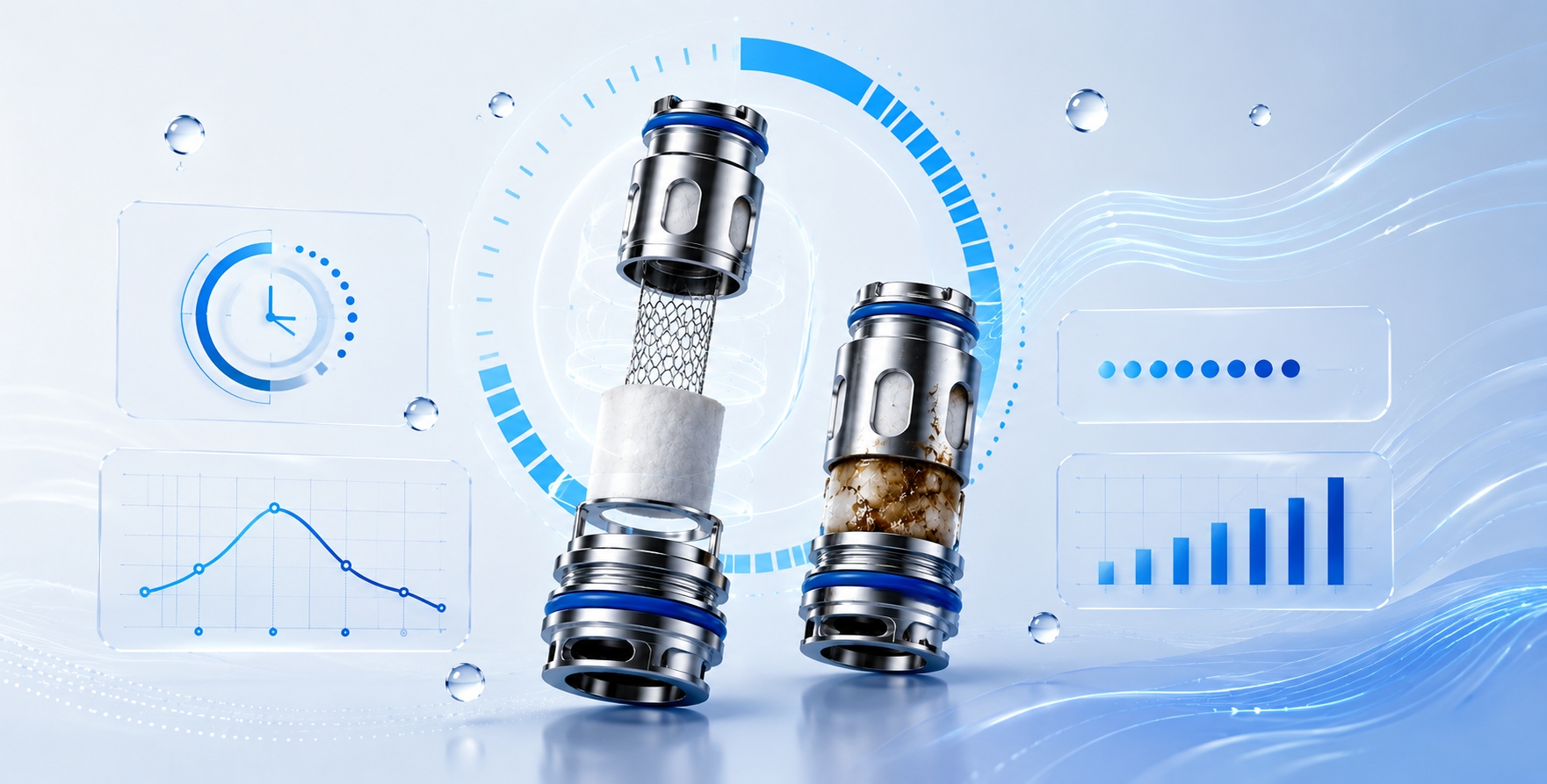
There is no universal lifespan for a vape coil. Coil life varies with coil design, power, e-liquid composition, wick saturation, puffing pattern, and device maintenance. Use the manufacturer's specifications and changes in performance as the primary guide for replacement rather than relying on a fixed number of days or puffs.
If you vape regularly, you've probably wondered how long a coil is actually supposed to last. The most accurate answer is that there isn't one replacement interval that applies to every coil or every user.
Coil design, operating power, e-liquid, wick condition, airflow, puff frequency, and maintenance all affect how a coil performs over time. Knowing what changes to watch for is more useful than assuming a coil must be replaced after a set number of days.
What Affects Vape Coil Lifespan?
1. Coil Design
Different coil families use different heating-element shapes, wire materials, wick structures, resistances, and recommended power ranges. Because those variables differ, two coils can age differently even when they're used in similar devices.
Research examining coil resistance, age, and metal material found that aerosol chemistry changed during coil use and that those changes were not consistent enough to generalize across every coil design or stage of coil life. Coil-aging research therefore supports evaluating the actual condition and performance of the coil rather than assuming one standard lifespan.
2. How Often the Device Is Used
More frequent use means more heating cycles and more e-liquid passing through the wick and heating element. That can accelerate changes in the wick and coil, but usage frequency alone still cannot predict an exact replacement date.
Long or repeated puffs can also affect how quickly the wick is able to resupply e-liquid between heating cycles. If the liquid supply cannot keep pace with use, parts of the heating element may operate under less-saturated conditions.
3. Wick Saturation
Adequate wick saturation is one of the most important factors in coil operation. A laboratory study published in PLoS ONE found that coil wetness had a major effect on measured heating temperatures, with dry or poorly supplied coils reaching substantially different temperatures from adequately wetted coils.
More recent research examining dry-hit conditions also investigated physical changes to heating coils and wicks when liquid supply was inadequate.
4. E-Liquid Composition
E-liquids differ in their PG/VG ratio, flavoring ingredients, sweeteners, and other formulation characteristics. These differences can affect how the liquid behaves when heated and how quickly residue develops on a coil.
Claims that all sweet liquids simply "caramelize" on a coil are too broad, but research does show that some sweetener-containing formulations behave differently during heating. Studies involving sucralose-containing e-liquids found that sucralose altered and enhanced chemical degradation reactions during aerosol generation.
That doesn't mean every sweet-tasting liquid contains sucralose or will affect every coil the same way. If a particular liquid produces visible buildup or causes flavor to decline more quickly in your device, that is a practical reason to inspect the coil sooner.
5. Power Settings
The operating power specified for the coil matters. Using a coil outside its manufacturer-supported wattage range can change heating conditions and potentially stress the wick or heating element.
Research on adjustable-power vaping devices found higher carbonyl emissions when tested coils were operated above their recommended power range. Power-setting research therefore reinforces the importance of following the coil manufacturer's specified range rather than simply increasing wattage for stronger vapor production.
6. Maintenance and Priming
A new coil should be prepared according to the manufacturer's instructions so the wick is adequately saturated before normal use. Continuing to use a coil when liquid levels are too low or when the wick cannot resaturate can contribute to dry or burnt hits.
For a more detailed explanation, see the guide to priming coils.
So How Long Should a Vape Coil Last?
There isn't a scientifically established number of days or puffs that applies across commercial vape coils. Manufacturer designs differ, and coil aging depends heavily on operating conditions.
| Factor | What to Watch |
|---|---|
| Usage frequency | More heating cycles can mean earlier performance changes |
| Power level | Operate within the exact coil's recommended wattage range |
| Wick saturation | Dry hits or repeated poor saturation can indicate a problem |
| E-liquid | Some formulations may create buildup or performance changes faster than others |
| Coil condition | Persistent burnt taste, reduced flavor, or abnormal performance may justify replacement |
A coil can still create vapor while no longer performing normally. Changes in taste, vapor output, liquid handling, or device behavior are more useful replacement signals than reaching a predetermined calendar date.
Signs It May Be Time to Replace Your Coil
Persistent burnt taste: A burnt or scorched taste can occur when the wick is damaged or inadequately saturated. If proper liquid level and operating settings don't resolve the problem, replacement may be appropriate.
Reduced or altered flavor: A noticeable decline in flavor can occur as residue accumulates or the wick and heating element age. However, flavor changes can also result from e-liquid, airflow, power, or device cleanliness.
Reduced vapor production: A worn coil can contribute to weaker output, but first check battery charge, airflow, power settings, and coil connections.
Gurgling or flooding: Excess liquid around the coil may cause gurgling. This can result from coil condition, installation, seals, liquid viscosity, or other tank-related problems, so gurgling alone doesn't automatically mean the coil is worn out.
Persistent leaking: A damaged or improperly installed coil or seal can contribute to leaking, but leaks can also originate elsewhere in the pod or tank.
For troubleshooting beyond normal wear, see the broader coil guide.
How to Help a Coil Perform Consistently
- Prime new coils properly. Follow the coil manufacturer's saturation instructions before first use.
- Use the recommended wattage. Stay within the operating range printed on the coil or specified by the manufacturer.
- Maintain adequate e-liquid. Avoid repeatedly operating the device when the wick is not properly supplied with liquid.
- Allow the wick to resaturate. Repeated back-to-back use may outpace liquid delivery in some setups.
- Use compatible e-liquid. Follow the device or coil manufacturer's recommendations for liquid viscosity and intended use.
- Keep the tank or pod maintained. Clean user-serviceable components according to manufacturer instructions and inspect seals and connections when problems occur.
General device maintenance can also make it easier to distinguish normal coil wear from problems caused by a dirty tank, damaged seal, blocked airflow, or poor connection.
Can You Clean a Vape Coil?
It depends on the coil design. Replaceable commercial coil heads and rebuildable coils should not automatically be treated the same way.
Replaceable coil heads: Follow the manufacturer's instructions. Many sealed coil heads contain absorbent wick that is not designed for repeated washing or solvent soaking, and cleaning cannot restore wick material that has already been scorched or degraded.
Rebuildable coils: Experienced users may be able to clean and rewick certain rebuildable atomizers because the heating element and wick are designed to be serviced separately. Follow the atomizer manufacturer's procedure and replace damaged components when necessary.
For more detail, see the guide on cleaning coils, while keeping the specific manufacturer's maintenance instructions as the primary reference.
Does Coil Age Affect Aerosol?
Coil aging isn't simply a matter of gradually producing less vapor. Researchers have found that chemical behavior can change at different stages of a coil's use.
A 2023 study examining resistance, coil age, and metal material found that coil age significantly influenced some carbonyl-formation pathways, while the relationship changed over the tested lifespan. The researchers specifically cautioned that aerosol chemistry cannot be generalized uniformly across the entire life of a coil.
Research has also identified transfer of metals associated with heating components into e-liquid and aerosol under studied conditions, further illustrating why heating-element condition and device design are meaningful variables rather than purely flavor considerations. Metal-transfer research has examined this relationship in refillable devices.
Practical takeaway: A coil doesn't have to completely stop producing vapor before replacement makes sense. Persistent burnt taste, abnormal performance, damaged wick, or manufacturer-defined replacement indicators are more useful than attempting to reach a particular number of days or puffs.
Frequently Asked Questions
How do I know when a vape coil needs replacing?
Persistent burnt taste, noticeably reduced or altered flavor, poor vapor production, or visible damage in a serviceable coil can indicate that replacement is appropriate. Check liquid level, power, airflow, and installation first because these symptoms can have other causes.
How many days should a vape coil last?
There is no universal number of days. Coil design, wattage, e-liquid, usage frequency, wick saturation, and maintenance all affect lifespan.
How many puffs should a coil last?
There is no reliable universal puff count for vape coils. Different coils and operating conditions age differently, so manufacturer guidance and actual performance are better replacement indicators.
Why does my coil taste burnt quickly?
Possible causes include inadequate initial saturation, low e-liquid supply, operating outside the recommended wattage range, or repeated use before the wick has had enough time to resupply liquid.
Does higher wattage shorten coil life?
Operating above the manufacturer's recommended wattage can expose the coil and wick to unsuitable heating conditions. Stay within the specified operating range for the exact coil.
Do sweet e-liquids wear coils faster?
Some formulations containing certain sweeteners can behave differently during heating, but sweetness alone doesn't tell you exactly how quickly a coil will age. Ingredient formulation, power, coil design, and usage all matter.
Can I wash and reuse a replaceable coil?
Only if the coil manufacturer specifically supports a cleaning procedure. Washing or solvent-soaking a sealed commercial coil should not be assumed to restore its wick or performance.
The Bottom Line
Vape coil lifespan isn't accurately measured by one fixed schedule. The more useful approach is to monitor coil performance while following the manufacturer's specifications for wattage, e-liquid compatibility, priming, and maintenance.
If flavor becomes persistently burnt or abnormal, vapor output changes significantly, the wick is visibly damaged, or troubleshooting doesn't restore normal operation, replacing the coil is generally more appropriate than trying to force additional use from it.
Research & Further Reading
- PLoS ONE — Measurement of Heating Coil Temperature for E-Cigarettes
- ACS — Effects of Coil Resistance, Age, and Metal Material on Aerosol and Carbonyl Formation
- Toxicology — Chemical and Coil/Wick Changes During Dry-Hit Conditions
- Tobacco Induced Diseases — Influence of Power Setting on Carbonyl Emissions
- Chemical Research in Toxicology — Sucralose-Enhanced E-Liquid Degradation
- Environmental Health Perspectives — Metallic Coils and Metal Concentrations in Aerosol
Last reviewed: September 2026. Coil lifespan varies by device, coil construction, power, e-liquid, wick saturation, maintenance, and usage. Follow the manufacturer's replacement and operating guidance for your specific coil rather than relying on a universal day or puff count.