 United States
Vape Maintenance Made Easy: How to Keep Your Setup Hygienic and Efficient
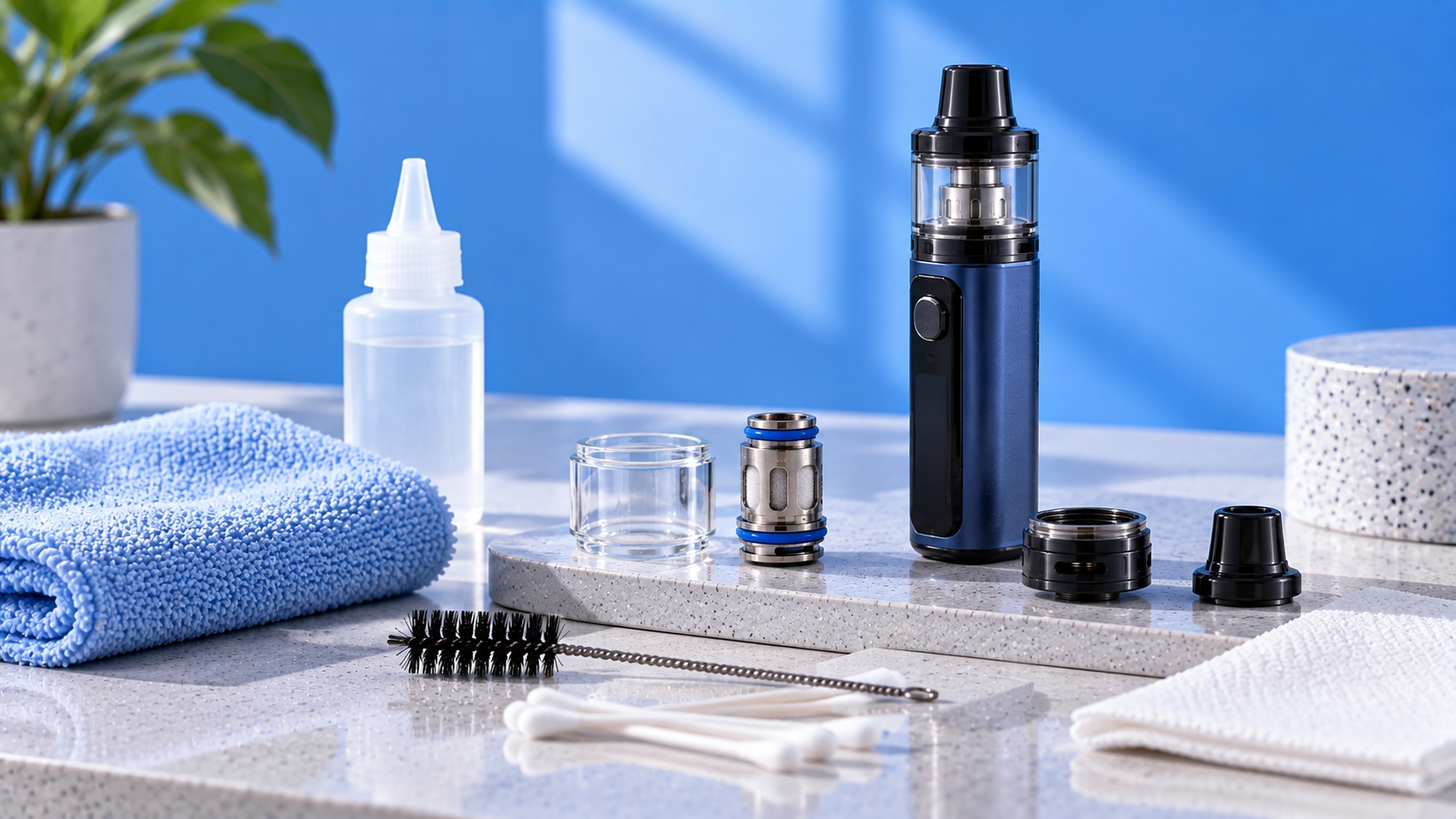
Maintenance procedures vary by device. Before cleaning, disassembling, charging, or replacing components, follow the instructions supplied by the manufacturer for your specific device, tank, pod, coil, and battery. Do not immerse electronic components or use cleaning agents unless the manufacturer specifically permits them.
Regular vape maintenance can help keep user-serviceable components clean, make performance problems easier to identify, and reveal worn or damaged parts before they create additional issues. But there is no single cleaning schedule or maintenance procedure that applies to every device.
A practical maintenance routine starts with knowing which parts of your setup can be cleaned, inspected, or replaced. This guide provides a broad maintenance checklist while directing more specific coil, tank, and battery questions to their dedicated guides.
Why Vape Maintenance Matters
E-liquid residue, condensation, dust, worn seals, aging coils, and dirty connection points can affect how a device operates. Routine inspection can help distinguish ordinary buildup from problems that require a replacement part or more specific troubleshooting.
Maintenance is particularly useful when you notice changes such as reduced flavor, inconsistent vapor production, leaking, connection problems, or visible residue. These symptoms do not always have the same cause, so identifying the affected component should come before replacing parts unnecessarily.
Key point: Treat manufacturer instructions as the primary maintenance reference. Tanks, pods, coils, batteries, seals, and electronic components can require different cleaning and handling procedures.
A Simple Vape Maintenance Routine
Instead of following a rigid daily or weekly schedule for every device, inspect your setup regularly and respond to its condition, usage, and manufacturer recommendations.
- Inspect the device. Look for visible residue, leaking, damaged components, loose connections, or unusual wear.
- Check the mouthpiece. Remove visible condensation or residue using the cleaning method recommended for its material and design.
- Inspect the tank or pod. Check for residue, damaged seals, cracks, leaking, and other signs that cleaning or replacement may be needed.
- Check the coil. Watch for persistent burnt flavor, reduced performance, flooding, or other changes that may indicate a coil problem.
- Inspect accessible connections. Keep user-serviceable contact areas free from visible e-liquid or debris according to the manufacturer's instructions.
- Check the power system. Inspect removable batteries, charging ports, cables, and the device exterior for visible damage before use or charging.
Mouthpiece and Exterior Care
The mouthpiece and exterior are among the parts most frequently exposed to condensation, residue, dust, and handling. Clean accessible surfaces according to the device manufacturer's instructions and allow any washable component to dry completely before reassembly.
Avoid assuming that alcohol, vinegar, soap, or another cleaning agent is suitable for every component. Plastics, coatings, seals, adhesives, and electronic parts can respond differently to cleaning products.
Electronic device bodies should not be submerged in water. If e-liquid enters a charging port, battery compartment, or another electrical area, stop using the device and follow the manufacturer's guidance for inspection and cleaning.
Tank and Pod Maintenance
Tanks and refillable pods can accumulate e-liquid residue and condensation over time. Their maintenance requirements depend on how the reservoir, seals, coil, airflow system, and other components are constructed.
When inspecting a tank or pod, check accessible seals, the reservoir, airflow areas, and connection points for buildup or damage. Only disassemble components intended to be user-serviceable.
A dedicated tank cleaning guide covers this process in greater detail. If the main issue is escaping e-liquid rather than routine cleaning, identifying the source of a leaking tank can help separate maintenance problems from damaged seals, incorrect assembly, or coil-related issues.
Coil Maintenance and Replacement
Coils are consumable components, but there is no universal replacement schedule that applies to every coil. Their condition can be affected by power, e-liquid composition, wick saturation, coil design, usage pattern, and other operating conditions.
Persistent burnt flavor, noticeably reduced performance, flooding, or visible deterioration can justify inspecting the coil. These symptoms can also have other causes, so check installation, e-liquid supply, airflow, and operating settings before assuming that age is the only problem.
The dedicated coil lifespan guide explains replacement signals and the variables that affect how coils age.
Cleaning requirements also depend on coil construction. Commercial replaceable coil heads and serviceable rebuildable coils should not automatically be treated the same way. The coil cleaning guide explains that distinction in more detail.
Prime New Coils Correctly
When installing a new coil, the wick needs an adequate supply of e-liquid before normal operation. Research measuring e-cigarette heating-coil temperatures found that coil wetness influenced measured temperature under experimental conditions.
Because coil and wick designs vary, follow the manufacturer's preparation instructions rather than assuming every coil requires exactly the same priming method or waiting time. The dedicated guide to priming coils provides more context on wick saturation and initial setup.
Battery and Charging Care
Battery maintenance deserves particular attention because battery configuration differs substantially between devices. Some use built-in rechargeable cells, while others accept removable lithium-ion batteries.
Inspect the device, charging port, cable, and any removable battery for visible damage. Do not continue using a removable battery with a damaged wrapper or other obvious physical damage, and do not improvise charging methods that are not supported by the manufacturer.
For devices using rechargeable lithium-ion batteries, the U.S. Consumer Product Safety Commission advises consumers not to use loose 18650 cells separated from battery packs because they can have exposed terminals that may short-circuit when they contact metal objects. More device-specific considerations are covered in the battery safety guide.
Store Your Device Properly
Storage conditions can affect the device, battery, e-liquid, and seals. Follow the manufacturer's recommendations regarding temperature, orientation, charging, and long-term storage.
Avoid leaving a device in excessive heat or direct sunlight. If a device will not be used for an extended period, check its manufacturer's instructions for storing the device and battery rather than applying one procedure to every model.
When Maintenance Becomes Troubleshooting
Routine cleaning cannot correct every device problem. If normal maintenance does not restore expected operation, identify the specific symptom before replacing components.
| Symptom | What to Check |
|---|---|
| Burnt flavor | Coil condition, wick saturation, e-liquid level, and operating power |
| Leaking | Coil installation, seals, reservoir condition, filling, and e-liquid compatibility |
| Weak vapor | Battery charge, coil condition, airflow, power setting, and connections |
| Connection error | Coil seating, compatibility, accessible contacts, and visible damage |
| Charging problem | Charging port, cable, supported charger, battery condition, and manufacturer instructions |
Persistent problems should be handled according to the manufacturer's troubleshooting instructions. Stop using equipment that is visibly damaged, unusually hot, leaking into electrical areas, or otherwise behaving abnormally until the cause has been identified.
Frequently Asked Questions
How often should I clean my vape?
There is no universal schedule for every device. Cleaning frequency depends on the component, device design, usage, residue buildup, and manufacturer recommendations. Inspect user-serviceable parts regularly and clean them when appropriate for the specific device.
Can I wash my entire vape with water?
No. Electronic components and device bodies should not be submerged. Some removable tanks, mouthpieces, or other non-electronic parts may support rinsing, but only use cleaning methods appropriate for the exact component and manufacturer instructions.
Can I use alcohol to clean a vape?
Do not assume alcohol is suitable for every component. Materials, seals, coatings, plastics, and electronics vary. Use a cleaning agent only when it is appropriate for the component and consistent with manufacturer guidance.
Does regular maintenance make vape coils last longer?
Coil lifespan depends on several variables, including power, e-liquid, wick saturation, coil construction, and usage. Proper setup and operation can help avoid preventable problems, but maintenance cannot guarantee a particular lifespan.
When should I stop using a vape device?
Stop using the device if you identify significant physical damage, liquid entering electrical areas, battery damage, abnormal heating, or another condition the manufacturer identifies as unsafe. Follow the manufacturer's troubleshooting or replacement instructions before using it again.
The Bottom Line
Vape maintenance works best as a routine of inspection, appropriate cleaning, component care, and early troubleshooting rather than a universal cleaning schedule. Check the mouthpiece, tank or pod, coil, connections, power system, and exterior according to the requirements of your particular setup.
When a maintenance question becomes specific—such as cleaning a tank, replacing a coil, priming a new coil, diagnosing a leak, or caring for a battery—the instructions for that component and the manufacturer's documentation should take priority over general maintenance advice.
Research & Further Reading
- PLoS ONE — Measurement of Heating Coil Temperature for E-Cigarettes
- U.S. Consumer Product Safety Commission — 18650 Battery Safety Alert
Last reviewed: September 2026. Maintenance requirements vary by device, tank, pod, coil, and battery configuration. Follow the cleaning, charging, storage, and replacement instructions supplied by the manufacturer for your specific hardware.