 United States
The Role of Vape Coils in Achieving Perfect Vapor Production
Vape coil compatibility, resistance, operating power, and intended draw style vary by device. Always use coils specifically supported by your tank or pod and follow the manufacturer's operating instructions rather than choosing a coil solely by resistance.
The coil inside a vape device plays an important role in how the setup heats e-liquid and produces aerosol. But choosing the right coil isn't simply a matter of picking the lowest resistance for more vapor or the highest resistance for better flavor.
Coil compatibility, resistance, construction, power, airflow, wick saturation, and e-liquid delivery all interact. The most reliable starting point is therefore the coil family designed specifically for your device.
What Are Vape Coils and Why Do They Matter?
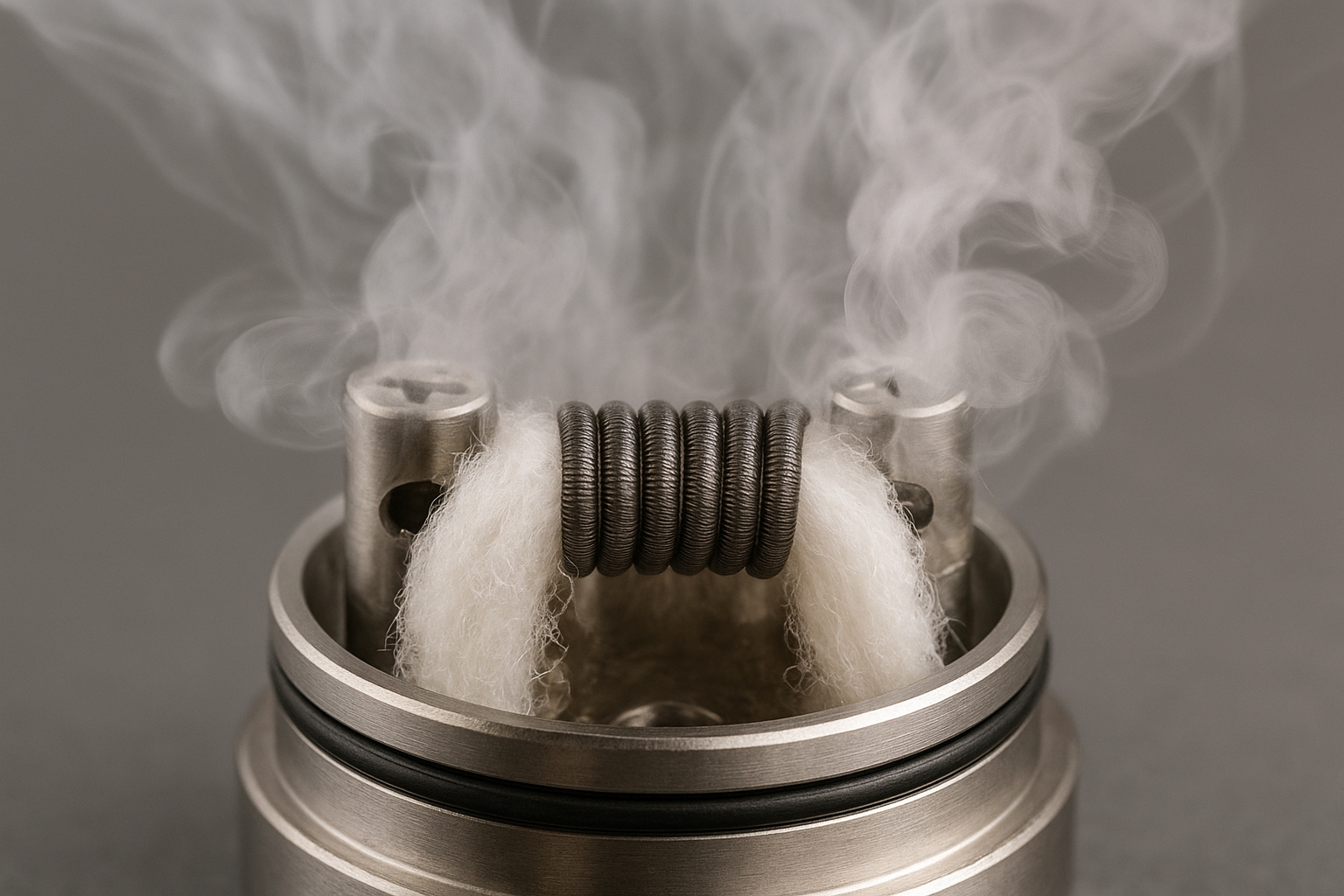
A vape coil is the heating element inside an atomizer, tank, or pod. In many commercial replacement coils, the heating element is surrounded by an absorbent wick that supplies e-liquid to the heated surface.
When electrical power reaches the coil, the heating element increases in temperature and the liquid supplied by the wick forms an aerosol. The result depends on more than resistance alone: applied power, coil geometry, airflow, e-liquid composition, and wick saturation all influence operating conditions.
Laboratory measurements of coil temperature found that heating conditions changed with applied power, resistance, e-liquid composition, and especially coil wetness, showing why coil performance cannot be reduced to a single specification.
Compatibility Comes Before Resistance
Before comparing resistance, materials, or advertised performance, confirm which coil family is approved for your tank or pod. Coils that look similar or share the same resistance value are not automatically interchangeable.
When comparing replacement coils, the exact coil family, device compatibility, resistance option, and manufacturer-specified operating range are more useful than choosing by ohm rating alone.
Key point: Physical fit does not automatically establish electrical or operational compatibility. Manufacturer specifications should remain the primary reference.
Understanding Vape Coil Resistance
Resistance is measured in ohms (Ω). Lower-resistance coils are commonly found in higher-output hardware, while comparatively higher-resistance coils are often used in lower-powered setups. Those patterns are useful for understanding device design, but they are not universal rules for flavor or vapor production.
A 2023 study examining resistance, coil age, heating-element material, temperature, and aerosol generation found that these factors interact in ways that make simple resistance-based comparisons unreliable. Research on coil resistance therefore supports looking at the complete coil and device design rather than using resistance as the only performance indicator.
Two coils with the same resistance can still differ substantially in heating-element material, mass, geometry, surface area, airflow requirements, and recommended power.
The relationship among voltage, current, resistance, and power described by Ohm's Law also explains why resistance should be considered alongside the electrical output of the device rather than as an isolated specification.
MTL, RDL, and DTL Coil Options
Compatible coils are often easier to compare by the draw style they were designed to support.
MTL (Mouth-to-Lung): Typically uses tighter airflow and lower operating power. Comparatively higher-resistance coils are common, although there is no single resistance cutoff that defines every MTL setup.
RDL (Restricted Direct-to-Lung): Uses a more open draw than traditional MTL while retaining more restriction than a full DTL setup. Compatible coil resistance and power ranges vary widely by device.
DTL (Direct-to-Lung): Usually pairs more open airflow with higher-output hardware. Lower-resistance coils are common, but resistance alone does not establish whether a coil is designed for DTL use.
Many modern pod systems support different draw styles through multiple compatible pod or coil options, making the manufacturer's intended configuration more useful than a generic resistance chart.
Common Coil Materials
Heating elements can be made from different resistance-wire materials. Their electrical properties vary, and each material should only be operated in modes supported by the device and coil manufacturer.
Kanthal
Kanthal is an iron-chromium-aluminum alloy commonly used for wattage-controlled heating elements. It is widely used in commercial and rebuildable coils and is generally not used for conventional temperature-control operation.
Nichrome
Nichrome is a nickel-chromium alloy used as resistance wire. Ni80 commonly refers to Nichrome 80 and should not be confused with Ni200, which is commercially pure nickel wire used in different applications.
Stainless Steel
Certain stainless-steel alloys can be used in wattage mode and, with compatible hardware, temperature-control modes. Suitability depends on the specific alloy and device configuration.
Nickel and Titanium
Nickel wire such as Ni200 and titanium have historically been used with compatible temperature-control systems. They should only be operated with hardware and settings specifically designed to support them.
Heating-element material can also influence aerosol chemistry under experimental conditions. Research comparing Kanthal, Nichrome, and stainless-steel filaments found that metal type and surface aging affected propylene glycol thermal decomposition. Surface chemistry research reinforces why material choice should not be reduced to claims such as one metal always providing better flavor.
What About Mesh Coils?
Mesh describes the shape of the heating element rather than a separate metal category. Instead of conventional wound wire, a mesh coil uses a perforated or mesh-like heating surface.
That geometry can change the amount and distribution of heating surface in contact with the wick, but mesh does not automatically guarantee stronger flavor, more vapor, or longer coil life. Power, airflow, wick construction, liquid supply, and overall coil engineering still determine performance.
How Wattage Affects Coil Performance
Commercial coils are designed around a manufacturer-specified operating range. Choosing wattage solely from a generic resistance chart ignores differences in heating-element size, geometry, wick design, and airflow.
Research examining adjustable-power devices found increasing carbonyl emissions as power increased, with particularly large increases when the tested coils were operated above their manufacturer-recommended range. Power-setting research supports staying within the operating range specified for the exact coil.
Practical takeaway: More wattage does not automatically mean better performance. The useful range is the one supported by the specific coil and device.
How to Choose the Right Coil
- Confirm compatibility. Identify the exact coil family supported by your tank, pod, or device.
- Consider your draw style. Compare manufacturer-designated MTL, RDL, or DTL options within that compatible coil family.
- Check the operating range. Make sure the coil's recommended wattage matches the capabilities and intended use of your device.
- Consider e-liquid compatibility. Follow hardware guidance for viscosity and intended use rather than assuming every high-VG liquid belongs with low-resistance coils or every higher-PG liquid belongs with higher resistance.
- Check replacement availability. Regular access to compatible coils matters for a refillable device that will be used long term.
A broader understanding of coil compatibility also helps explain why matching resistance alone does not make two replacement coils interchangeable.
Why Wick Saturation Matters
The wick must continuously supply enough e-liquid to the heating element during operation. If liquid delivery cannot keep pace with heating, portions of the coil may operate under inadequately saturated conditions.
In laboratory testing, wetness had a substantial effect on measured coil temperature, with dry conditions producing very different temperatures from fully wetted conditions. Experimental temperature measurements demonstrate why adequate liquid supply matters during operation.
Proper coil priming helps establish adequate wick saturation before normal use, although the exact preparation procedure and waiting time should come from the coil manufacturer rather than a universal rule.
Common Coil Problems and What They Can Mean
Burnt Taste
A persistent burnt or scorched taste can occur when the wick is inadequately saturated or has already been damaged. Liquid level, operating power, coil condition, and manufacturer priming instructions should all be considered before assuming one single cause.
Leaking or Flooding
Liquid around the coil can result from installation problems, damaged seals, flooding, liquid characteristics, or tank design. Overtightening the coil should not be used as a universal fix because it can damage seals or threaded components.
Reduced Vapor Production
Lower output can be associated with coil condition, but battery charge, power settings, airflow, e-liquid delivery, flooding, and electrical contact can produce similar symptoms.
Short Coil Life
Coil lifespan is affected by hardware design, operating power, e-liquid, wick saturation, frequency of use, and maintenance rather than a single universal replacement schedule.
Differences in coil lifespan make actual performance and manufacturer guidance more useful replacement indicators than assuming every coil should last a fixed number of days.
How to Help a Coil Perform Consistently
- Prime according to manufacturer instructions. Ensure the wick is adequately saturated before normal use.
- Stay within the specified wattage range. Avoid increasing power beyond the coil's supported operating range.
- Maintain adequate liquid supply. Repeated operation with insufficient wick saturation can alter heating conditions.
- Allow liquid to resupply the wick. Rapid repeated use can outpace liquid delivery in some coil designs.
- Maintain the tank or pod. Keep user-serviceable components clean and inspect seals and connections when problems occur.
- Replace persistent problem coils. A coil that remains burnt, damaged, or abnormal after basic troubleshooting may require replacement.
Do Newer Coil Technologies Automatically Perform Better?
Not necessarily. Newer commercial coils may introduce different mesh patterns, wick structures, heating surfaces, or manufacturing techniques, but newer hardware does not automatically perform better in every device or for every draw style.
Temperature-control systems are another example. Compatible devices attempt to regulate heating based on changes in coil resistance, but experimental research has reported differences between device-indicated and independently measured temperatures. Temperature-control testing reinforces the importance of compatible hardware, supported coil materials, and correct configuration.
Claims that specific coil technologies are biodegradable, recyclable, environmentally friendly, or inherently superior should be supported by product-specific evidence rather than treated as industry-wide facts.
Frequently Asked Questions
Does lower resistance mean more vapor?
Not automatically. Lower-resistance coils are common in higher-output hardware, but aerosol production also depends on applied power, coil construction, airflow, wick saturation, e-liquid delivery, and device design.
Does higher resistance produce better flavor?
There is no universal relationship between higher resistance and better flavor. Flavor perception depends on the complete setup, including power, coil geometry, airflow, e-liquid, wick condition, and individual preference.
Is Ni80 the same as Ni200?
No. Ni80 normally refers to Nichrome 80, a nickel-chromium alloy used as resistance wire. Ni200 refers to commercially pure nickel wire and has historically been associated with compatible temperature-control systems.
Are mesh coils always better?
No. Mesh changes the shape and surface distribution of the heating element, but overall performance still depends on power, airflow, wick design, liquid delivery, and the complete coil construction.
Can I use any coil with the same resistance?
No. Equal resistance does not mean two coils share the same physical dimensions, electrical characteristics, airflow requirements, power range, or device compatibility.
What wattage should I use?
Use the operating range specified for the exact coil and device. A generic resistance chart cannot account for differences in coil construction and heating characteristics.
How often should a coil be replaced?
There is no universal replacement interval. Persistent burnt taste, significant performance changes, physical damage in serviceable hardware, and manufacturer-defined replacement indicators are more useful than a fixed number of days or puffs.
Final Thoughts
Choosing the right vape coil starts with compatibility. Once the correct coil family is identified, resistance, intended draw style, recommended power, construction, and e-liquid requirements can be compared within that compatible range.
Resistance should not be treated as a shortcut for predicting flavor or vapor quality. The coil functions as part of a complete system that includes electrical power, airflow, wick saturation, e-liquid composition, and device design, making manufacturer specifications the most reliable starting point.
Research & Further Reading
- PLoS ONE — Measurement of Heating Coil Temperature for E-Cigarettes
- Chemical Research in Toxicology — Effects of Coil Resistance, Coil Age, and Metal Material
- Nicotine & Tobacco Research — Surface Chemistry of Electronic Cigarette Heating Coils
- Tobacco Induced Diseases — Influence of Battery Power Setting on Carbonyl Emissions
- PLoS ONE — Temperature-Control Performance in Electronic Cigarettes
Last reviewed: September 2026. This article was reviewed against peer-reviewed research on coil temperature, resistance, heating-element materials, power settings, and temperature-control performance. Coil compatibility and operating limits remain device-specific, so manufacturer specifications should be treated as the primary reference for individual hardware.