 United States
Vape Coil Guide: How to Choose the Right Coil for Your Device
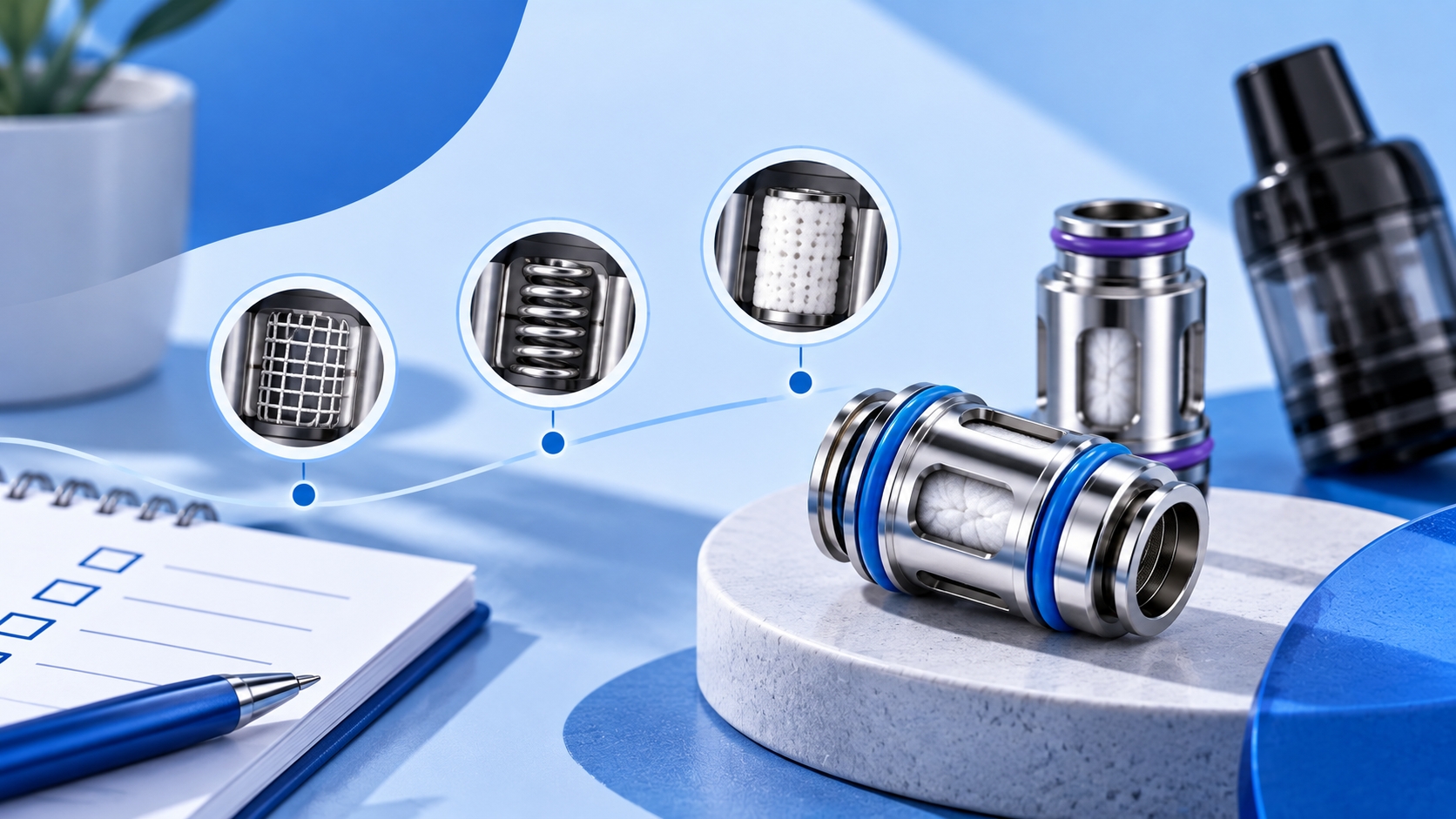
Coil compatibility, resistance, recommended wattage, and e-liquid suitability vary by device. Always use coils specifically supported by your tank or pod and follow the manufacturer's operating range. Resistance alone does not determine flavor, vapor production, or the appropriate power setting.
Choosing the right vape coil starts with compatibility. Resistance matters, but it is only one part of how a coil performs. Construction, material, surface area, recommended wattage, airflow, and e-liquid supply all work together.
This guide focuses on understanding those specifications so you can compare compatible coils and choose an option suited to your device and preferred draw style without relying on resistance alone.
Understanding Vape Coil Types
Vape coils are commonly associated with the type of draw and power range they are designed to support. Two familiar categories are mouth-to-lung (MTL) and direct-to-lung (DTL), with restricted-direct-lung (RDL) sitting between them on many modern devices.
MTL (Mouth-to-Lung): MTL setups generally use tighter airflow and lower power. Comparatively higher-resistance coils are common, although the exact resistance depends on the device and coil family.
RDL (Restricted-Direct-Lung): RDL setups provide more airflow than typical MTL configurations while remaining more restricted than an open DTL draw. Compatible resistance and wattage ranges vary by manufacturer.
DTL (Direct-to-Lung): DTL setups generally use more open airflow and higher power to produce greater vapor volume. Lower-resistance coils are common, but resistance alone does not determine whether a coil is intended for DTL use.
Some modern pod systems support more than one draw style through different compatible pods or coils. The manufacturer's specifications for the exact coil are more reliable than using a fixed resistance cutoff to classify it.
Vape Coil Resistance Explained
Electrical resistance is measured in ohms (Ω). It forms part of the relationship among voltage, current, and power, but resistance should not be interpreted independently of the rest of the device.
Two coils with different resistance values may also differ in material, mass, geometry, heating surface, airflow requirements, and recommended wattage. These differences can substantially change how each coil operates.
Research published in PLoS ONE found that heating-coil temperature was influenced by multiple variables, including resistance, applied power, e-liquid composition, and coil wetness. This supports treating resistance as one specification among several rather than as a standalone predictor of coil temperature or performance.
The relationship among resistance, voltage, current, and power is covered more specifically in this Ohm's Law guide.
Key point: Do not choose wattage solely because a coil is above or below a particular resistance. Use the operating range specified for the exact coil installed in your device.
Mesh vs. Traditional Wire Coils
Replacement coils may use traditional wound wire, mesh-style heating elements, or manufacturer-specific variations of these designs.
Traditional wire coils use one or more lengths of resistance wire formed into a coil. Their operating characteristics vary according to material, gauge, geometry, resistance, airflow, and power.
Mesh coils use a mesh-like heating element that creates a different heating surface and geometry. Manufacturers now use mesh across a wide range of resistance values, power levels, and draw styles.
Neither construction automatically guarantees better flavor, vapor production, or lifespan. The complete coil design and the conditions under which it is operated matter more than the word “mesh” or “wire” by itself.
Coil Materials and Performance
Heating elements can be made from different metal alloys, and their electrical and temperature-dependent properties vary.
Kanthal: Commonly used as resistance wire in wattage-controlled applications. It generally holds its shape well and is not normally used for conventional temperature-control operation.
Stainless steel: Certain stainless-steel alloys can operate in wattage mode and, with compatible hardware, temperature-control mode.
Nichrome: Another resistance-wire material used in vaping coils. Its electrical properties differ from Kanthal, while actual coil behavior also depends on factors such as gauge and geometry.
Research published in Nicotine & Tobacco Research examined Kanthal, Nichrome, and stainless-steel heating filaments and found that filament material and aging could influence carbonyl-formation chemistry under experimental conditions.
Another study indexed by PubMed examined resistance, coil age, and metal material, showing that their relationships with temperature and aerosol chemistry are more complex than a single specification can explain.
For a more focused comparison of two commonly discussed materials, Kanthal vs. stainless steel covers their characteristics in greater detail.
Coil Compatibility Comes First
Before comparing resistance, material, or power range, confirm that the coil is designed for your specific tank, pod, or device. Two coils can have identical resistance values without being physically or electrically compatible.
Manufacturers often produce several options within the same coil family, each with different resistance values and recommended wattage ranges. When comparing replacement coils, check the exact coil family, compatible device or tank, resistance, and operating range.
If compatibility is unclear, use the device manual, coil packaging, or manufacturer's official specifications. A coil should not be installed simply because it appears to fit.
Wattage Matters Alongside Resistance
Most replacement coils include a manufacturer-specified operating range. That range provides a more appropriate starting point than using a generic resistance-to-wattage chart.
A study indexed by PubMed reported increased carbonyl emissions when tested adjustable-power devices were operated beyond the coil manufacturer's recommended power range.
For an unfamiliar coil, begin with its specified operating range rather than assuming that higher wattage will automatically improve flavor or vapor production.
How to Choose the Right Vape Coil
Once you know which coil family is compatible with your device, compare the available options using the specifications that actually affect how the setup is intended to operate.
- Confirm compatibility. Identify the exact coil family supported by your tank, pod, or device.
- Check the intended draw style. Determine whether the coil is designed primarily for MTL, RDL, DTL, or another manufacturer-defined setup.
- Compare resistance. Use resistance together with the manufacturer's other specifications rather than treating it as the deciding factor.
- Check the wattage range. Make sure your device can operate within the recommended range for that specific coil.
- Consider e-liquid suitability. Follow the coil or device manufacturer's guidance regarding the liquids intended for the setup.
- Consider coil construction. Mesh, traditional wire, material, and heating geometry can differ even among coils within the same family.
Simple rule: Compatibility comes first. After that, compare draw style, resistance, wattage range, construction, and manufacturer recommendations to choose among the coils your device actually supports.
After Choosing the Right Coil
Choosing a compatible coil is only the first step. Correct setup and maintenance also influence how consistently it operates.
A new coil should be adequately saturated before normal use. The dedicated guide to priming coils covers that process in more detail.
Replacement timing also varies rather than following a universal number of days. Usage, power, e-liquid, coil design, and wick condition can all contribute, which is covered separately in the coil lifespan guide.
Routine care is a separate consideration as well. The coil cleaning guide explains when cleaning may be appropriate and when replacement is the better option.
Frequently Asked Questions
How do I know which coil is right for my device?
Start with the manufacturer's compatibility information. Once you know which coil family fits your device, compare the available resistance, wattage range, intended draw style, and other specifications within that family.
Can I use any coil with my vape?
No. Coil families are designed for particular tanks, pods, and devices. Matching resistance does not mean two coils are interchangeable.
What is the difference between MTL and DTL coils?
MTL coils are generally associated with tighter airflow and lower-power operation, while DTL coils typically support more open airflow and greater vapor output. The manufacturer's intended use is more reliable than resistance alone when identifying the draw style of a coil.
Does lower resistance automatically mean more vapor?
No. Vapor production depends on the overall setup, including coil construction, power, airflow, heating surface, e-liquid supply, and device configuration. Resistance is only one variable.
What wattage should I use for my vape coil?
Use the operating range specified by the manufacturer for the exact coil installed. Avoid selecting wattage from a generic chart based only on resistance.
Does vape coil material matter?
Yes, but material should be considered alongside the complete coil design. Kanthal, stainless steel, Nichrome, and other materials have different electrical properties, while geometry, resistance, power, and airflow also affect operation.
What resistance should I choose?
There is no universal resistance that is best for every user or device. First identify the compatible coils for your hardware, then compare their intended draw style, recommended power range, and other manufacturer specifications.
Final Thoughts
The right vape coil is not simply the option with the highest or lowest resistance. Start by identifying the exact coil family supported by your device, then compare draw style, resistance, recommended wattage, construction, material, and e-liquid requirements among those compatible options.
Keeping this guide focused on coil selection also makes related questions easier to navigate: priming, cleaning, lifespan, and other maintenance concerns each have different causes and considerations that are better addressed separately.
Research & Further Reading
- PLoS ONE — Measurement of Heating Coil Temperature for E-Cigarettes
- Tobacco Induced Diseases — Influence of Battery Power Setting on Carbonyl Emissions
- Nicotine & Tobacco Research — Surface Chemistry of E-Cigarette Heating Coils
- ACS — Effects of Coil Resistance, Age, and Metal Material on Aerosol and Carbonyl Formation
Last reviewed: September 2026. Coil specifications and compatibility vary by device and manufacturer. Confirm the supported coil family and operating range for your specific hardware before installation or use.