 United States

Why Does My Vape Vibrate? Haptic Alerts and Warning Signs
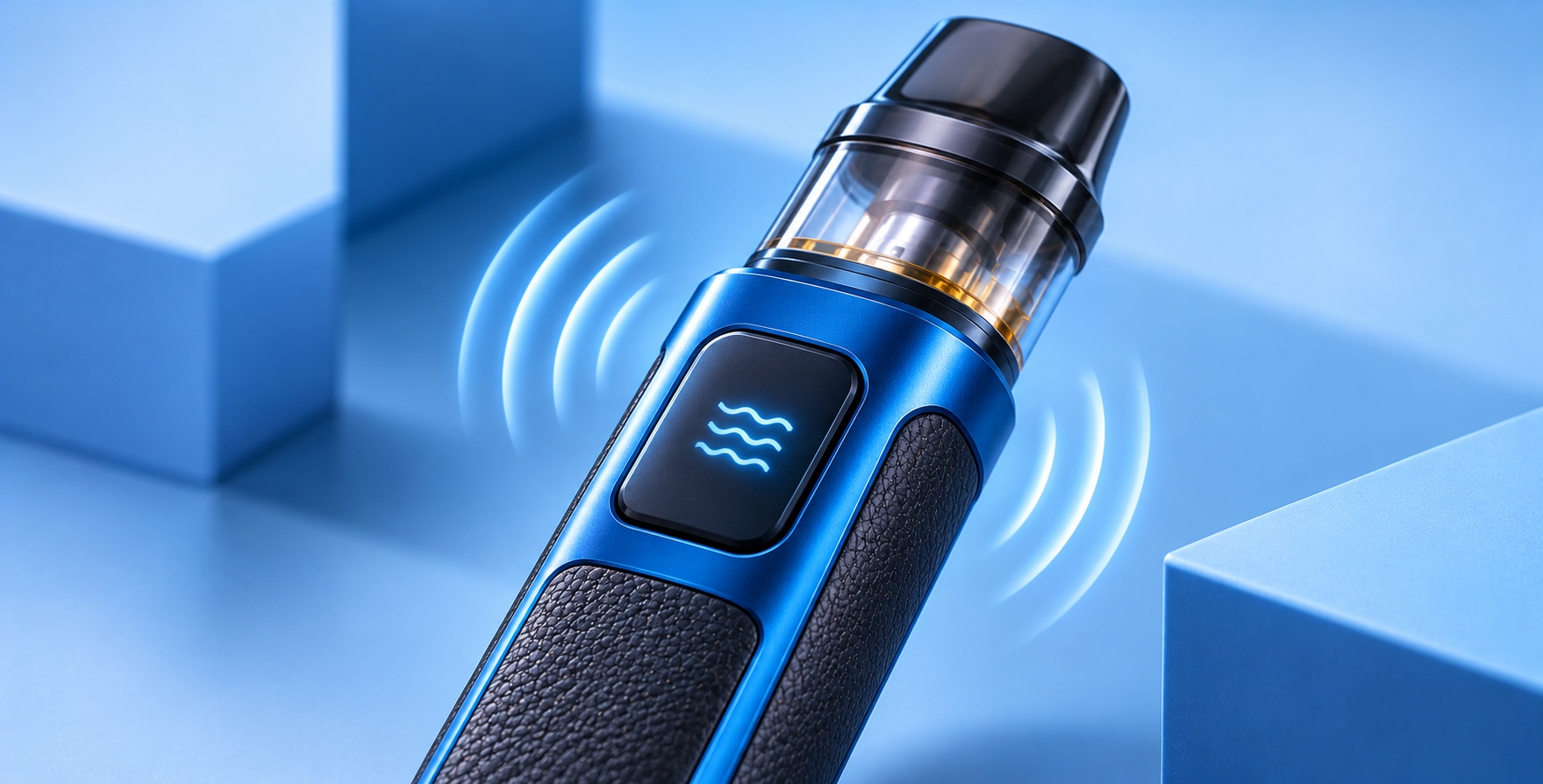
If your vape suddenly vibrates, pulses, or produces a brief buzzing sensation, the cause may be a built-in notification feature or an unexpected mechanical or electrical issue. The important distinction is whether the device is designed to provide vibration feedback.
Some electronic devices use haptic feedback to communicate actions through physical sensations rather than sound or light alone. However, haptic feedback is not a standard feature across all vape devices. Many pod systems and regulated mods communicate their status exclusively through screens, LEDs, or other indicators.
This guide explains what vibration may mean on a compatible vape, how to distinguish intentional haptic alerts from unexplained buzzing, and which warning signs require you to stop using the device.
Quick Verdict: If your vape has a manufacturer-documented vibration feature, a short pulse may indicate a control action, notification, or device status. The exact meaning depends on the model. If the manufacturer does not describe vibration as a feature, unexpected buzzing should not automatically be considered normal. Stop using the device if the sensation is accompanied by unusual heat, unexpected firing, electrical warnings, physical damage, or abnormal noises.
What Is Haptic Feedback on a Vape?
Haptic feedback is a method of communicating information through physical sensations, such as vibration or a brief pulse. In electronic products, this feedback is generally produced by a dedicated actuator controlled by the device's electronics.
Where a vape manufacturer includes a haptic system, it may provide feedback during certain interactions. Possible applications include confirming a control input or signaling a device-defined event, but these functions should never be assumed without model-specific documentation.
Haptic feedback is different from the vibration or buzzing that may be felt when a mechanical component is loose or an electrical system is malfunctioning.
Why Might a Vape Vibrate?
1. Built-In Haptic Notifications
On a device equipped with haptic feedback, vibration may be an intentional part of its interface. The manufacturer may assign particular patterns to supported controls or notifications.
A brief pulse occurring consistently after the same button input may be an intentional response if that behavior is documented in the user manual.
However, the presence of a screen, chipset, or adjustable settings does not establish that a device includes a vibration motor.
2. Control or Button Feedback
Some electronics use tactile feedback to confirm that an input has been registered. If a vape supports this feature, a vibration may occur when a control is pressed or a setting is changed.
Do not confuse a mechanical button click with an electronically generated haptic pulse. A button can produce a tactile sensation without containing a vibration actuator.
3. A Manufacturer-Defined Warning
A haptic-equipped device could use vibration to communicate a warning or protection event. However, there is no universal vibration code that applies to all vape brands or models.
One pulse, two pulses, or repeated vibration should not be interpreted as a specific battery, coil, or temperature warning unless the manufacturer's documentation explicitly defines that pattern.
For screen-equipped devices, the accompanying message may provide more useful information. Vape.com's screen indicators guide explains how common display readings and messages differ.
4. Loose or Damaged Hardware
A loose component may produce a rattling or buzzing sensation during handling. Depending on the device design, this could involve a removable tank, pod, button, battery cover, or another external component.
Mechanical rattling is not the same as a deliberate haptic notification. It may occur when the device is moved rather than when a particular electronic event occurs.
Do not open a sealed housing or attempt to tighten internal components to investigate the noise.
5. Abnormal Electrical or Battery Behavior
Unexpected buzzing or vibration-like sensations can sometimes be associated with electrical or mechanical faults. However, the sensation alone does not identify a failed battery, circuit board, or other specific component.
The concern becomes more serious when the device also becomes unusually hot, activates unexpectedly, produces abnormal odors, or shows visible damage.
These conditions should be treated as potential safety warnings rather than ordinary notification behavior.
Normal Haptic Feedback vs. Unexpected Vibration
The timing, consistency, and accompanying symptoms can help distinguish documented device feedback from behavior that needs attention.
| What You Notice | Possible Explanation | Recommended Response |
|---|---|---|
| Brief pulse during a documented control action | Intentional haptic feedback | Confirm the pattern in the manual |
| Repeated vibration with a displayed warning | Possible model-specific alert | Follow the manufacturer's warning instructions |
| Rattling when the device is moved | Possible loose component | Inspect only user-accessible hardware |
| Unexpected continuous buzzing | Unconfirmed mechanical or electrical fault | Stop using and seek manufacturer guidance |
| Buzzing with excessive heat or unexpected firing | Potential serious device malfunction | Stop using and charging immediately |
This comparison is a general troubleshooting reference, not a universal vibration-code chart. The device manual is the authoritative source for its supported alerts.
How to Check an Unexpectedly Vibrating Vape Safely
Step 1: Stop Using the Device if the Vibration Is Unexplained
If the device begins vibrating or buzzing in a way you have not experienced before, stop activating it. Disconnect charging equipment if it is safe to do so.
Do not repeatedly fire the device to reproduce the sensation, especially if you suspect an electrical problem.
Step 2: Identify the Manufacturer and Model
Find the exact model name and consult its official manual. Look for sections covering haptic feedback, vibration, device notifications, control settings, and protection warnings.
If vibration is not listed as a supported feature, avoid assuming that the behavior is intentional.
Step 3: Check for Accompanying Indicators
Observe any warning messages or LED patterns already visible on the device. Note whether the sensation occurred during charging, handling, or normal operation.
Do not continue activating the device solely to generate an error message.
Step 4: Inspect Accessible Exterior Components
If the device is cool, switched off, and otherwise safe to handle, look for visible damage or loose user-removable parts. Follow the manufacturer's instructions for checking the tank, pod, or battery cover.
Do not open the chipset enclosure, insert tools into openings, or attempt to adjust internal wiring.
Step 5: Watch for Battery and Activation Warning Signs
Excessive heat, swelling, smoke, abnormal odors, leaking, or unintended activation are reasons to stop troubleshooting and seek appropriate assistance.
Vape.com's auto-firing troubleshooting guide explains why unexpected heating-element activation must be treated differently from ordinary device feedback.
Step 6: Contact Manufacturer Support
If the vibration remains unexplained or the device behaves abnormally, contact the manufacturer or an authorized service provider. Provide the model name, when the issue started, the observed vibration pattern, and any accompanying warning messages.
Safety Warning: Do not open a sealed vape device to locate a suspected vibration motor, disconnect internal components, or modify the battery system. If buzzing is accompanied by excessive heat, smoke, swelling, leaking, unexpected firing, or unusual odors, stop using and charging the device. If a battery is actively smoking or burning, move away and contact emergency services.
Does Vibration Mean the Vape Battery Is Low?
Not necessarily. A manufacturer could assign a haptic alert to a battery-related event on a compatible device, but there is no universal rule that vibration means low battery.
Many devices communicate low charge through screen icons, text warnings, or LED patterns instead. Check the exact model's documentation before interpreting a vibration as a battery notification.
A battery warning accompanied by excessive heat or physical damage should not be dismissed as a routine low-charge reminder.
Why Does My Vape Buzz While Charging?
A brief documented haptic notification when charging begins may be normal on a device that supports that feature. However, unexplained continuous buzzing, vibration, or unusual noise during charging should not automatically be considered normal.
Stop charging if the device produces unfamiliar noises, becomes unusually hot, or displays abnormal behavior. Follow the manufacturer's charging instructions and contact support if the cause is unclear.
Vape.com's battery safety guide covers charging precautions and physical warning signs separately.
Can a Vape Vibrate Without Having Haptic Feedback?
A device may produce a vibration-like sensation without a dedicated haptic system. Mechanical rattling, loose external components, or abnormal buzzing can sometimes be perceived as vibration.
However, the sensation does not identify the underlying cause. It is not possible to diagnose a circuit-board fault, battery problem, or loose component from the word "vibrating" alone.
The most useful first step is checking whether the manufacturer identifies vibration as an intentional feature of the exact model.
Can You Turn Off Vape Vibration?
Only if the manufacturer provides a supported setting for doing so. Some haptic-equipped electronic products allow feedback customization, but that capability should not be assumed for vape devices.
Check the user manual for any vibration or feedback settings. Do not attempt firmware modifications, internal disassembly, or electrical changes to disable an unexplained vibration.
When Should You Stop Using a Vibrating Vape?
Stop using the device and seek manufacturer guidance when any of the following occurs:
- Vibration begins unexpectedly and is not described in the manual.
- Buzzing becomes continuous or progressively more pronounced.
- The device activates its heating element without intentional input.
- Unusual heat develops around the battery or electronics.
- Smoke, leaking, swelling, or abnormal odors appear.
- The device has been dropped or damaged and now behaves differently.
- A persistent protection warning accompanies the vibration.
A device may still display information or respond to buttons even when another component has malfunctioned. Continued screen operation does not prove that the hardware is safe.
Frequently Asked Questions
Why does my vape vibrate when I press the button?
If your model includes documented haptic feedback, a brief vibration may confirm a control action. If the manual does not describe this behavior, or the sensation has changed unexpectedly, stop using the device and seek manufacturer guidance.
Is it normal for a vape to vibrate?
It may be normal on a model designed with haptic feedback. Vibration is not a universal feature of vape devices, so the official manual should be used to confirm whether the behavior is intentional.
Does a vibrating vape mean something is wrong?
Not always. A documented haptic pulse may be normal, while unexplained buzzing could indicate a mechanical or electrical issue. Accompanying symptoms such as heat, unexpected firing, or physical damage are particularly important.
Why does my vape vibrate but not produce vapor?
The two symptoms may have separate causes. If vibration is a documented notification, check its meaning in the manual. Failure to produce vapor may involve a locked device, coil recognition, battery condition, or another issue. Do not repeatedly activate a malfunctioning device.
Can a loose battery make a vape vibrate?
A loose component may produce rattling during movement, but that is different from electronic haptic feedback. Do not force batteries into place or modify battery contacts. Follow the manufacturer's instructions for checking removable components.
Should I keep using my vape if it buzzes continuously?
No continued use is recommended when the buzzing is unexplained or abnormal. Stop using and charging the device, check the official manual, and seek manufacturer support before attempting further operation.
Final Verdict
A vibrating vape is not automatically malfunctioning. On a device with documented haptic feedback, brief pulses may be part of the intended interface. However, the meaning of any vibration pattern depends on the manufacturer and exact model.
Unexpected buzzing should be evaluated differently from a confirmed notification. Mechanical rattling, damaged components, and electrical faults can sometimes create similar sensations, but the cause cannot be determined from vibration alone.
Identify the device model, consult its official documentation, and avoid invasive troubleshooting. If vibration occurs alongside abnormal heat, unexpected firing, battery damage, or persistent warnings, stop using the device and seek appropriate support.
Bottom Line: A documented haptic pulse may be normal. An unexplained vibration is not proof of a particular fault, but it should never be ignored when accompanied by unusual heat, electrical warnings, or unexpected activation.
Technical References & Editorial Review
This article explains general haptic-feedback principles and battery-powered device safety. It does not claim that all vape devices include vibration motors, that a particular vibration pattern has a universal meaning, or that a specific device was physically tested.
- U.S. Food and Drug Administration — Tips to Help Avoid Vape Battery Fires or Explosions: battery handling, charging precautions, and manufacturer instructions.
- U.S. Fire Administration — Battery Fire Safety: warning signs of lithium-ion battery problems.
- Vaporesso — Official Vape FAQs: examples of manufacturer-specific device troubleshooting.
Editorial Note: Prepared for adults of legal purchasing age. The article distinguishes documented haptic notifications from unexplained mechanical or electrical behavior. No specific vibration pattern should be treated as a confirmed device warning without the exact manufacturer's documentation. General safety references do not establish that a particular vape model includes haptic feedback.