 United States
Troubleshooting Vape Auto-Firing Issues
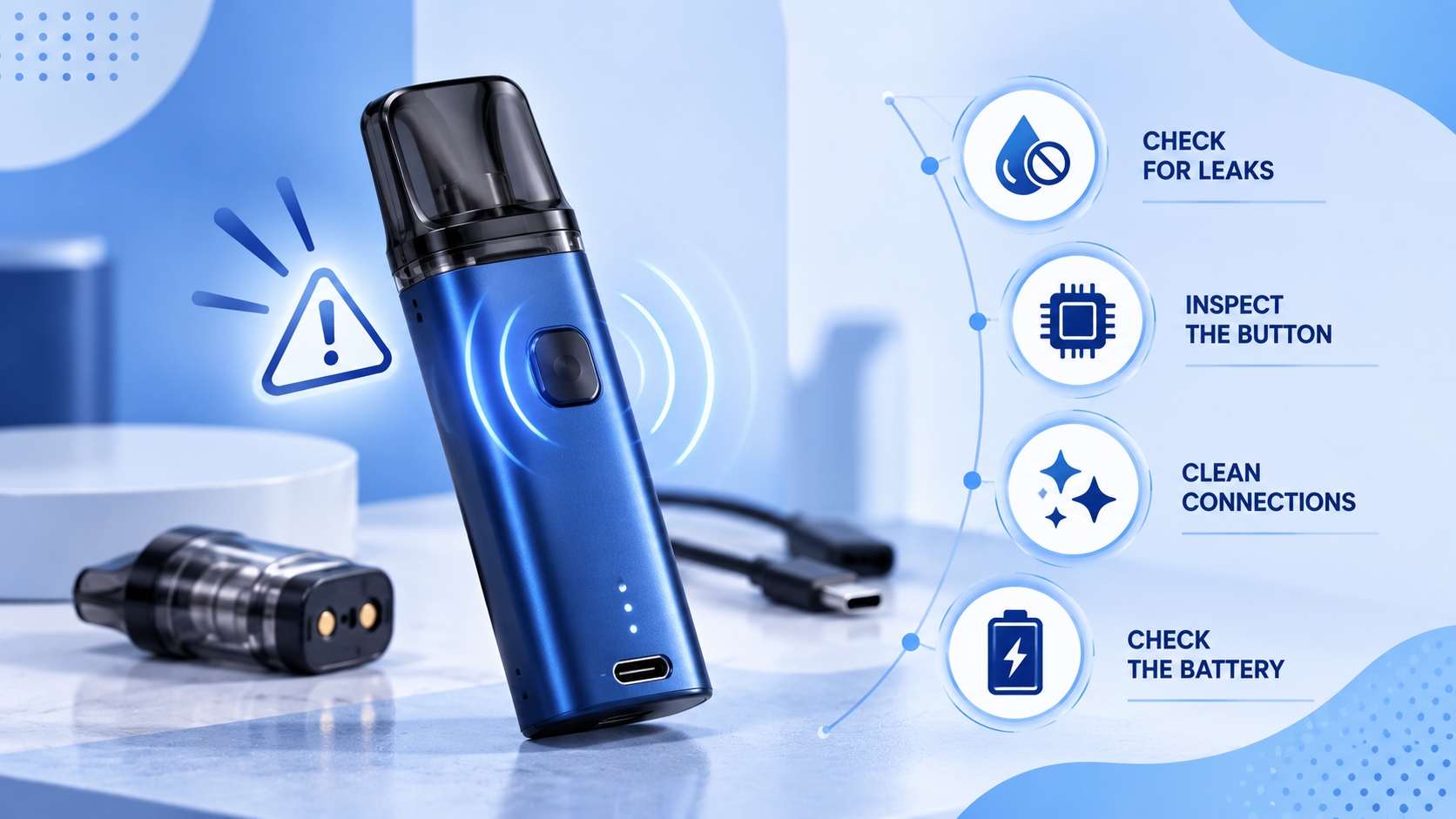
A vape that activates without intentional input should be treated as a device malfunction. Stop using the device if it begins firing on its own, becomes unusually hot, smells abnormal, or shows signs of battery damage. Do not continue testing a malfunctioning device if doing so requires repeatedly activating or disassembling it.
Ever had your vape suddenly activate even though you didn't intentionally fire it? This behavior, commonly called auto-firing, shouldn't be ignored. An unintentionally activated heating element can continue generating heat, drain the battery, damage the coil or surrounding components, and potentially create a battery-safety concern.
Auto-firing can have several possible causes, including a stuck button, liquid or debris around accessible contacts, an activation-sensor problem, or an internal electronic fault. This guide explains the warning signs, what you can safely check, and when it's better to stop troubleshooting and contact the manufacturer.
What Is Vape Auto-Firing?
Auto-firing occurs when a vaping device activates its heating element without the user intentionally pressing the fire button or, on draw-activated devices, intentionally taking a puff.
Unexpected activation deserves attention because the device is generating heat when it shouldn't be. If the battery compartment also becomes unusually hot, proper battery safety becomes especially important.
The U.S. Food and Drug Administration (FDA) recommends protecting vape batteries from damage and extreme temperatures and following the manufacturer's instructions for battery use and charging.
What Can Cause a Vape to Auto-Fire?
The exact cause depends on the device. Because auto-firing can involve mechanical, sensor, electrical, or internal electronic problems, it's better to treat the following as possible causes rather than assuming one explanation applies to every device.
Stuck or Damaged Fire Button
On button-activated devices, a fire button that becomes stuck, physically damaged, or obstructed by debris may fail to operate normally. If the button doesn't click, release, or respond the way it normally does, stop using the device until the problem is understood.
Liquid or Condensation Around Connections
Leaking e-liquid or accumulated condensation can reach accessible contacts or other parts of a device. While a leak doesn't automatically mean it caused auto-firing, unexpected liquid around electrical connections is a reason to stop using the device and inspect it according to the manufacturer's instructions.
Addressing e-liquid leaks early can also help prevent liquid from spreading beyond the tank or pod area.
Draw-Sensor Problems
Some pod systems and other devices activate automatically when airflow is detected. If a draw-activated device begins activating without an intentional puff, a sensor, condensation, or internal electronic issue may be involved.
Do not repeatedly test an auto-firing device to determine whether the sensor will correct itself. If unexpected activation continues, stop using it.
Internal Electronic Faults
A malfunction involving the chipset, wiring, switch, sensor, or another internal component may also cause abnormal behavior. Internal electrical problems generally aren't appropriate for routine at-home troubleshooting unless the manufacturer specifically provides a safe procedure.
Battery or Power Problems
Battery damage doesn't automatically explain every case of auto-firing, but unusual heat, swelling, leaking, discoloration, or other battery abnormalities occurring alongside unexpected activation should be taken seriously.
The U.S. Fire Administration (USFA) recommends stopping use of lithium-ion batteries that show excessive heat, changes in shape or color, leaking, unusual odors, or odd noises.
Stop-use warning: If a vape is firing on its own and also becomes excessively hot, swells, leaks, produces an unusual odor, or shows other signs of battery failure, stop using it. If the battery is actively smoking, burning, or rapidly swelling, move away and contact emergency services rather than attempting to handle the failing device yourself.
What to Do If Your Vape Starts Auto-Firing
Unexpected activation should be treated differently from routine problems such as weak vapor or a worn coil. Your first priority is stopping use rather than continuing to troubleshoot while the device remains active.
- Stop using the device. Don't continue vaping to see whether the problem disappears.
- Turn it off if it is safe to do so. Use the normal power or locking control if the device can be handled safely.
- Place it away from combustible materials. If the device is unusually hot, allow it to cool in a safe location and avoid unnecessary handling.
- Inspect accessible areas after it has cooled. Look for a stuck button, visible leaking, condensation, damaged connections, or other obvious abnormalities without opening sealed internal electronics.
- Check the manufacturer's instructions. Follow device-specific troubleshooting guidance rather than attempting undocumented repairs or resets.
- Stop troubleshooting if auto-firing returns. Repeated unexpected activation can indicate a problem that requires manufacturer or qualified technical support.
Auto-firing combined with unexplained heat, charging problems, physical damage, or inconsistent operation can also be one of several warning signs that a device should be taken out of use.
Should You Remove the Battery?
If the device uses a removable battery, don't automatically attempt to remove it while the device is actively overheating, smoking, swelling, or otherwise showing signs of battery failure. Handling a failing lithium-ion cell can create additional risk.
If the device is cool, stable, and the manufacturer provides instructions for safely removing the battery, follow those instructions. Built-in batteries should not be opened or removed by the user unless the manufacturer specifically designed the device for that procedure.
How to Help Prevent Auto-Firing
Keep Accessible Areas Clean
Residue, condensation, and debris can accumulate around buttons, pod connections, airflow openings, and other accessible areas. Regular device maintenance can help keep these areas clean and make abnormal wear or leaking easier to spot.
Address Leaks Early
Don't allow persistent e-liquid leaks to spread through the device. Check the pod, tank, seals, coil installation, and other user-serviceable components according to manufacturer instructions.
Protect the Device From Damage
Drops, crushed buttons, damaged housings, and exposure to liquid can affect switches, sensors, batteries, and internal electronics. Stop using a device if physical damage changes the way it activates or operates.
Use the Locking Feature When Available
If your device has a firing-button lock or other activation lock, use it when storing or carrying the device. The FDA specifically recommends considering devices with safety features such as firing-button locks and protections against accidental activation.
Pay Attention to Battery Condition
Regularly inspect removable batteries for damaged wraps, dents, swelling, leaking, discoloration, or other physical changes. Follow the manufacturer's charging instructions and don't continue using batteries that appear damaged or behave abnormally.
Auto-Firing vs. Normal Device Behavior
Not every sound or brief activation-like behavior means a device is auto-firing. Some regulated devices have screens, indicator lights, or other functions that activate independently of the heating coil.
What matters is whether the heating element itself is activating without intentional input. If you're unsure whether the behavior is normal for your model, consult the device manual or manufacturer rather than repeatedly testing it.
When to Stop Using the Device
Some problems shouldn't be treated as routine DIY fixes. Stop using the device and contact the manufacturer or appropriate technical support if:
- Auto-firing continues after the device has been turned off and safely inspected.
- The device repeatedly activates without intentional input.
- The battery compartment becomes unusually hot.
- The battery is swollen, leaking, dented, discolored, or otherwise damaged.
- There is a persistent burning, chemical, or unusual odor.
- The fire button or activation sensor appears physically damaged.
- There is visible internal damage.
- The device has been significantly dropped, crushed, or exposed to liquid and now behaves abnormally.
Persistent auto-firing may involve a switch, sensor, chipset, battery, or another internal component. Unless the manufacturer specifically provides repair instructions, opening or modifying internal electronics isn't recommended as a routine troubleshooting step.
Take Auto-Firing Seriously
A vape activating on its own isn't something to ignore or repeatedly test. Stop using the device, turn it off when safe, allow it to cool if necessary, inspect only accessible components, and follow manufacturer troubleshooting instructions.
Regular maintenance, proper battery care, early attention to leaks, and protecting the device from physical damage can reduce avoidable problems and make warning signs easier to recognize.
If the device continues activating unexpectedly after basic checks, replacement or professional support is safer than repeatedly attempting to make a malfunctioning device work.
Official Sources & Further Reading
- FDA — Tips to Help Avoid Vape Battery Fires or Explosions
- U.S. Fire Administration — E-Cigarette Fire Safety
- U.S. Fire Administration — Battery Fire Safety
Last reviewed: September 2026. Troubleshooting procedures vary by device. Always follow the manufacturer's instructions and stop using a vape that activates unexpectedly, develops excessive heat, shows battery damage, or continues behaving abnormally after basic safety checks.