 United States
Vape Compatibility Guide: How to Know Which Parts Fit Your Device
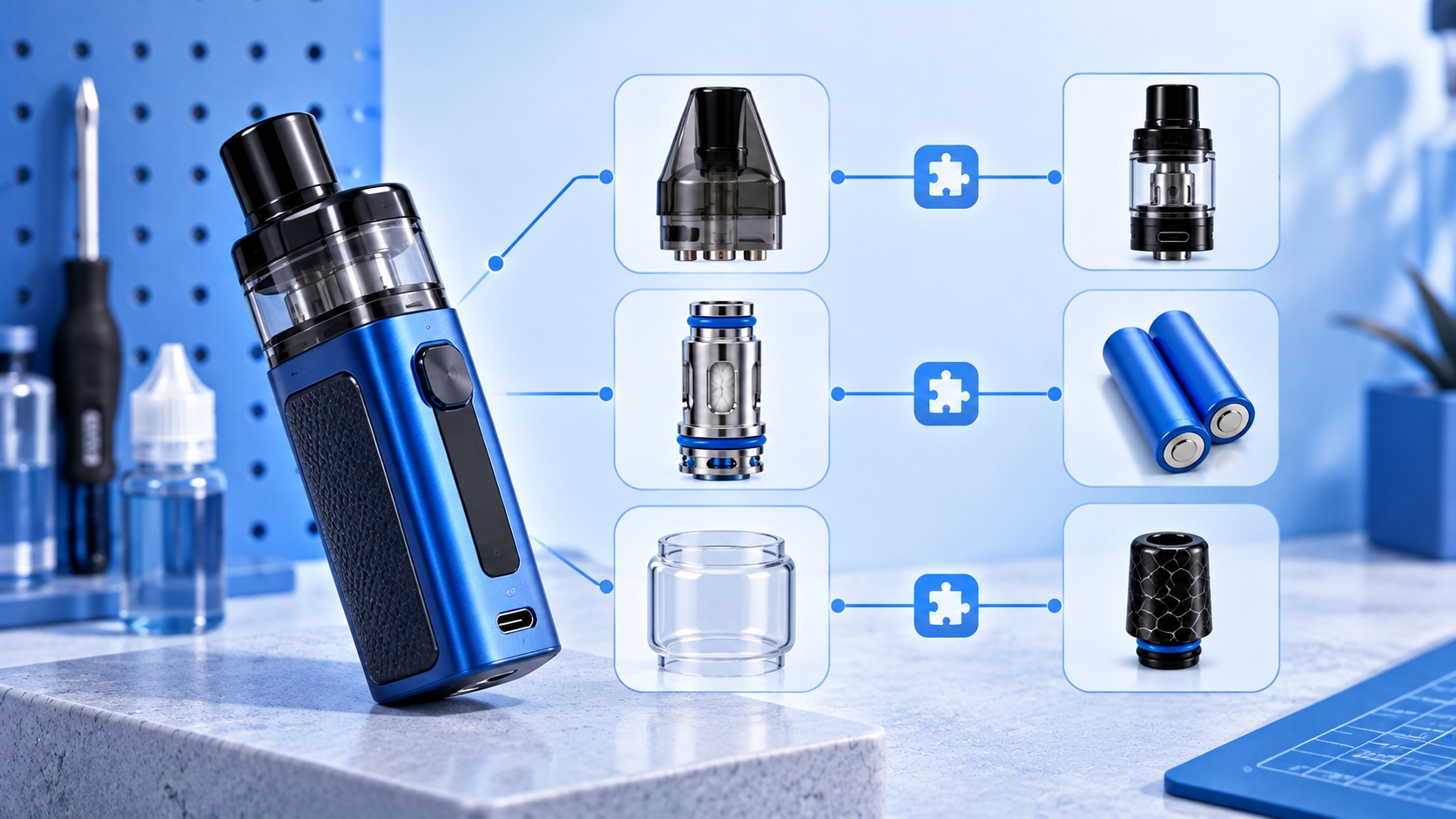
This guide is intended for adult users of legal purchasing age. Vape components are not universally interchangeable. Always verify compatibility using the device or component manufacturer's current specifications before installing or using replacement hardware.
Finding a replacement vape part can look simple until you see two pods, coils, or tanks that appear almost identical but are designed for completely different devices. A matching brand name—or even a similar product name—doesn't automatically mean the parts will fit or work correctly together.
Compatibility depends on several factors, including the device series, connection type, physical dimensions, coil platform, resistance range, and the specifications established by the manufacturer.
This guide explains how to check vape compatibility before choosing replacement parts such as pods, coils, tanks, and other user-replaceable components.
What Does Vape Compatibility Actually Mean?
A compatible vape component is designed to physically connect to the device and operate within its intended specifications. Compatibility can involve more than whether a component simply fits.
Depending on the hardware, you may need to check:
- Brand and device family
- Exact device model
- Pod or cartridge series
- Coil family or platform
- Coil resistance
- Recommended wattage range
- Tank connection type
- Physical dimensions
- Manufacturer-listed compatibility
Because manufacturers often use proprietary component systems, parts from different product families should not be assumed to be interchangeable.
Start With the Exact Device Model
The safest starting point is identifying the exact model of your device.
Look for the model name on the device itself, its original packaging, instruction manual, or manufacturer documentation. Avoid relying only on appearance because different devices within the same brand can have similar designs.
Once you know the model, compare it with the compatibility information provided for the replacement component. The manufacturer's current product page, manual, or compatibility chart should be treated as the primary reference.
A manufacturer may produce several pod systems under the same brand while using different pod or coil platforms. A replacement component designed for one series may not necessarily work with another.
How to Check Vape Pod Compatibility
Replacement pods are usually designed around a particular device or product family. Even when two pods appear similar, small differences in their dimensions, contacts, magnets, or coil configuration can determine whether they are compatible.
Before purchasing a replacement pod, check:
- The exact pod or cartridge series
- The devices officially listed as compatible
- Whether the coil is built into the pod or replaceable
- Available resistance options
- Physical connection or magnetic layout
Some manufacturers design one pod family to work across several generations of devices, while others introduce a different cartridge design for newer models. Never assume that two pods are interchangeable simply because they have a similar shape.
How to Check Vape Coil Compatibility
Coil compatibility can be more complicated because manufacturers may offer several coil families designed for different tanks, pods, or devices.
Check the coil packaging or official manufacturer specifications for:
- Coil series or family
- Compatible tanks or devices
- Resistance
- Recommended wattage range
- Installation or connection type
The coil family is particularly important. Two coils from the same manufacturer can use different dimensions, contacts, or mounting systems and therefore may not be interchangeable. Vape.com's replacement coils include multiple brands and coil families, making the exact series and device compatibility more useful identifiers than appearance alone.
For a broader explanation of coil types, resistance, and device selection, the vape coil guide covers those factors separately from the hardware compatibility process discussed here.
Coil Resistance and Compatibility Are Not the Same Thing
Resistance, measured in ohms (Ω), describes an electrical characteristic of the coil. It does not tell you whether the coil physically fits a particular device.
For example, two replacement coils could both be rated at 0.8Ω but belong to completely different coil platforms. Matching resistance alone is therefore not enough to establish compatibility.
Always confirm the coil family first, then check whether the resistance and manufacturer-specified operating range are appropriate for your specific device.
How to Check Vape Tank Compatibility
Many traditional vape mods and tanks use a standardized 510 threaded connection. However, a shared connection type does not automatically make every tank suitable for every device.
Before pairing a tank with a device, consider:
- Connection type
- Device-supported resistance range
- Recommended operating wattage of the installed coil
- Tank diameter and physical fit
- Device and battery specifications
- Manufacturer recommendations
A tank may physically attach to a device while still being poorly matched to the device's intended operating specifications. Physical connection should therefore be treated as only one part of compatibility.
If a previously compatible tank suddenly stops being recognized, that is a different issue from choosing compatible hardware. Connection problems and 510-related detection issues are covered separately in the No Atomizer guide.
Built-In Coil Pods vs. Replaceable-Coil Pods
Understanding how the pod is designed can also prevent compatibility mistakes.
Built-in coil pods combine the coil and cartridge into one replaceable component. When the coil reaches the end of its usable life, the entire pod is replaced.
Replaceable-coil pods allow the pod body to remain in use while the compatible coil itself is replaced separately.
Knowing which design your device uses helps prevent a common mistake: purchasing standalone replacement coils for a pod that does not accept them.
Can You Mix Vape Parts From Different Brands?
Do not assume that components from different brands are compatible simply because they look similar or appear to use the same type of connection.
Pods and proprietary coil systems should generally be treated as manufacturer- and platform-specific unless official manufacturer documentation states otherwise.
Standardized connections such as 510 threading can provide broader hardware compatibility, but the device, tank, installed coil, resistance range, and operating requirements still need to be checked before use.
How to Identify a Replacement Part Before Buying
A simple compatibility check can help prevent ordering the wrong component.
- Identify your exact device model. Check the device, packaging, manual, or manufacturer documentation.
- Determine which component needs replacing. Identify whether you need a pod, coil, tank, or another user-replaceable component.
- Find the component family or series. Do not rely only on resistance or appearance.
- Check the manufacturer's compatibility information. Look specifically for your exact device model.
- Confirm resistance and operating specifications. This is particularly important for coils and tanks.
- Compare the complete product name and model. Small naming differences can indicate different hardware generations.
If the manufacturer does not list your device as compatible, do not assume the component will work simply because it looks similar.
Common Vape Compatibility Mistakes
Choosing by Appearance
Pods and coils from different product generations can look nearly identical while using different dimensions, contacts, or internal designs. Appearance alone is not a reliable compatibility check.
Matching Only the Resistance
Two coils with the same resistance can belong to completely different coil platforms. Resistance should be checked only after confirming the correct coil family.
Assuming Everything From One Brand Works Together
Manufacturers can maintain multiple coil, tank, and pod ecosystems at the same time. Sharing a brand name does not automatically mean components are interchangeable.
Ignoring the Exact Model Name
Terms such as “Mini,” “Pro,” “Plus,” “Max,” or a generation number can identify meaningful hardware differences. Check the complete model name rather than only the main product family.
Assuming Physical Fit Means Full Compatibility
A component connecting physically does not by itself confirm that the complete setup falls within the manufacturer's intended operating specifications.
A Simple Vape Compatibility Checklist
Before buying a replacement vape component, confirm the following:
- Exact device model
- Replacement component type
- Pod, coil, or tank family
- Manufacturer-listed compatibility
- Resistance, when applicable
- Recommended operating range
- Connection type
- Physical fit
Checking these details together provides much stronger evidence that you are choosing the correct replacement component than relying on appearance, brand, or resistance alone.
When Compatibility Isn't the Problem
If a component is confirmed as compatible but performance has changed over time, the component may instead be worn, improperly installed, or affected by another device issue. Coil performance, for example, changes with factors such as power, e-liquid, wick saturation, usage, and maintenance. The guide on coil lifespan explains the signs that can help distinguish normal wear from a compatibility problem.
Final Thoughts
Vape compatibility is about more than finding a part that looks like the one you already have. Device families, proprietary pod systems, coil platforms, resistance options, connections, and operating specifications all help determine whether components are intended to work together.
The simplest approach is to identify your exact device first and work outward from there. Check the manufacturer's current compatibility information before purchasing or installing replacement hardware, and avoid treating similar appearance or matching resistance as proof that two components are interchangeable.
Compatibility can vary by manufacturer, device generation, and component version. Product specifications may change over time, so verify current compatibility information with the manufacturer for your exact device and replacement component.
Editorial & Review Note: This article provides general hardware and compatibility information for adult users. Compatibility recommendations should be verified against the current manufacturer manual, official product specifications, or compatibility documentation for the exact device and component. This guide does not override manufacturer instructions or device-specific safety requirements.