 United States
Button-Fired vs. Draw-Activated Vapes: How Each System Works
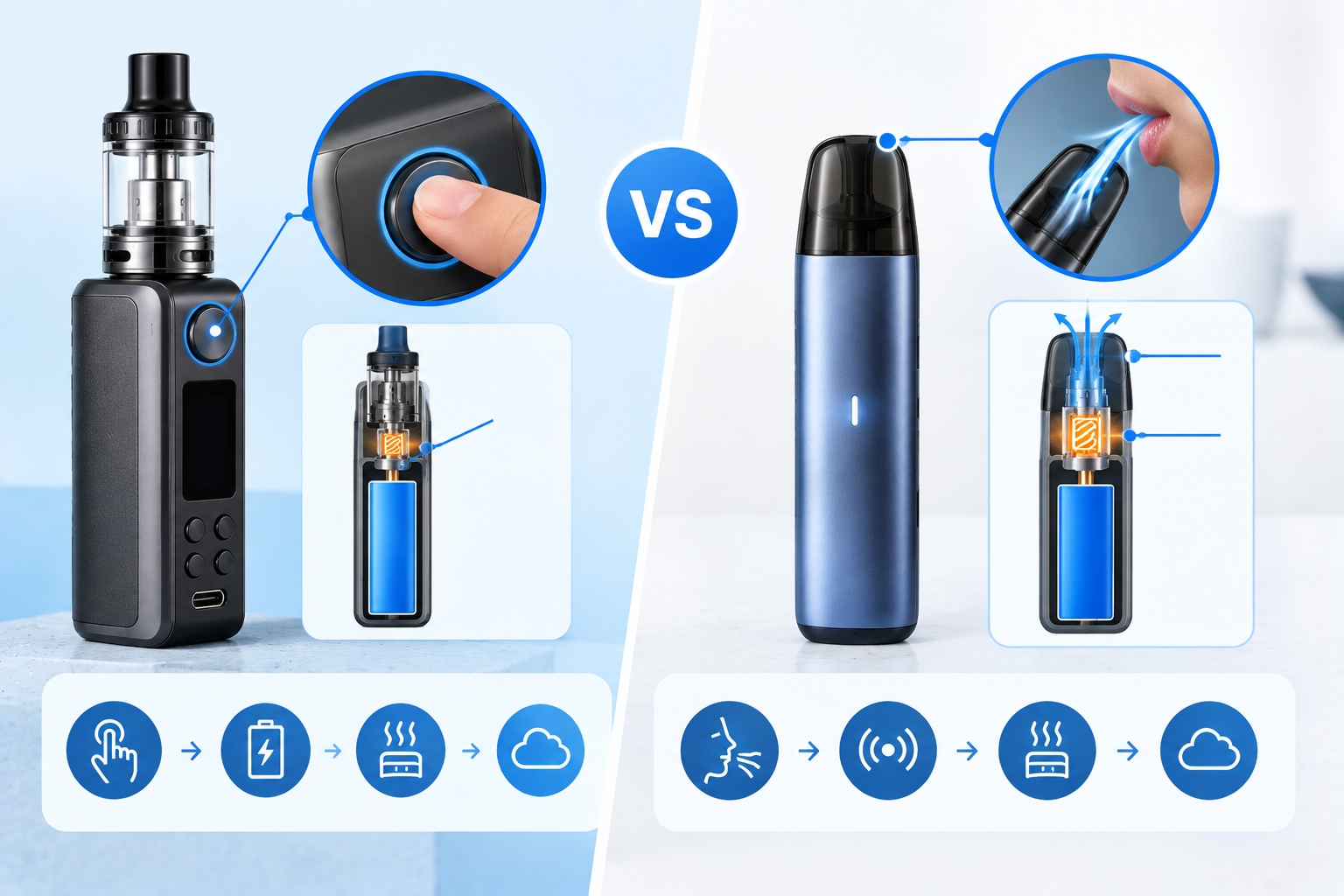
Vape activation systems vary by device. Some models use a physical firing button, others activate when they detect a draw, and some support both methods. Always check the manufacturer's instructions for the controls and safety features of your specific device.
Some vapes begin firing when you inhale, while others require you to press a button. Both systems ultimately trigger electrical power to the heating element, but the way the device receives that activation signal is different.
Understanding the difference between button-fired and draw-activated vapes can make device operation easier to understand and can also help narrow down the cause when a vape does not activate as expected.
This guide explains how each activation system works, where they differ, why some devices support both, and what common activation problems can mean.
What Does Vape Activation Mean?
Activation is the process that tells a vape device to supply electrical power from its battery to the heating element. Once powered, the heating element heats the e-liquid in contact with the wick and produces an aerosol.
The two common activation methods are button firing and draw activation. Button-fired devices receive the activation command from a physical control, while draw-activated devices use a sensor to detect conditions created by inhalation.
Activation is only one part of how a device operates. The battery, control circuitry, coil, airflow path, pod or tank connection, and built-in protection systems can all affect whether the device successfully fires.
How Does a Button-Fired Vape Work?
A button-fired vape uses a physical firing button to initiate the heating process. Pressing the button sends an input to the device's electronics, which then supply power to the heating element if operating conditions are within the device's permitted range.
In simplified terms, the process works like this:
- The user presses the firing button.
- The device registers the button input.
- The control circuitry allows power to reach the heating element.
- The heating element begins heating the e-liquid.
- The user inhales while airflow carries the resulting aerosol through the mouthpiece.
The important distinction is that the button initiates activation. Airflow is still involved when the user inhales, but inhalation itself does not normally have to trigger the electrical firing process on a button-only device.
Why Do Some Vapes Have a Fire Button?
A firing button provides a direct physical input for activation. Depending on the device, the same button may also perform additional functions such as powering the device on or off, locking the controls, navigating settings, or changing operating modes.
These controls are not standardized across every vape. A sequence of button presses that performs one function on one device could perform something different on another.
This is one reason correctly identifying your vape device matters when looking up operating instructions or troubleshooting an unfamiliar control.
How Does a Draw-Activated Vape Work?
A draw-activated vape is designed to initiate firing without requiring the user to press a firing button. Instead, the device detects the airflow or pressure change associated with inhalation.
A typical draw-activation sequence works like this:
- The user inhales through the mouthpiece.
- Air moves through the device's airflow pathway.
- An internal sensor detects the resulting airflow or pressure change.
- The device's electronics activate the heating element.
- Power stops when the draw ends or when a built-in cutoff is reached.
The exact sensing mechanism and sensitivity can differ between device designs. This means two draw-activated vapes may not respond identically even though both use automatic activation.
Button-Fired vs. Draw-Activated Vapes: What's the Difference?
| Feature | Button-Fired Vape | Draw-Activated Vape |
|---|---|---|
| Activation trigger | Physical button press | Detected inhalation, airflow, or pressure change |
| User action | Press the firing control while inhaling | Inhale through the mouthpiece |
| Draw sensor required | Not normally required for basic firing | Yes |
| Additional controls | Button may also control settings or locking functions | Often fewer physical controls, depending on the device |
| Possible activation issues | Button, lock, battery, connection, or protection issue | Airflow, condensation, sensor, battery, or connection issue |
The fundamental difference is therefore what tells the device to begin heating. One relies on deliberate button input, while the other relies on detecting the conditions created by inhalation.
Can a Vape Have Both Button and Draw Activation?
Yes. Some vape devices support both activation methods. Depending on the model, users may be able to activate the device either by pressing the firing button or simply by inhaling.
Some devices may also allow one activation method to be disabled through a lock or operating setting. This behavior is model-specific, so the manufacturer's manual should be used to confirm what a particular device supports.
The presence of a button also does not automatically mean that pressing it fires the device. On some products, a physical control may be used primarily for settings, airflow adjustment, power levels, or other functions.
Why Might a Draw-Activated Vape Stop Responding?
Because automatic activation depends on detecting a draw, anything that interferes with the airflow pathway or sensing system can potentially affect activation.
Possible causes can include:
- Blocked airflow openings
- Condensation or liquid around the airflow pathway
- A poorly seated pod
- Dirty electrical contacts
- Insufficient battery charge
- A damaged or malfunctioning sensor
- A device-level electrical fault
A connection problem can sometimes resemble an activation problem. If the sensor detects the draw but the device cannot establish a proper electrical connection with the pod or coil, it may still fail to produce aerosol.
Intermittent cartridge contact is covered separately in Vape.com's guide to pod connection problems, since the underlying issue may be the contacts rather than the activation sensor itself.
Why Might a Button-Fired Vape Not Fire?
A button-fired vape that does not respond does not necessarily have a broken firing button. The problem can originate elsewhere in the device.
Possible causes include a discharged battery, a locked or powered-off device, poor pod or atomizer contact, a damaged firing control, or a protection circuit preventing operation.
For example, a regulated vape that detects an electrical short may prevent firing and display an atomizer short warning rather than sending power to the heating element.
A device that stops firing after several seconds can also be behaving differently from one that never activates. Many regulated devices include a firing cutoff designed to stop continuous activation after a manufacturer-defined period.
Does Activation Method Affect Airflow?
Activation and airflow are related, but they describe different parts of device operation.
On a draw-activated device, inhalation creates the airflow or pressure condition used by the sensor to initiate firing. On a button-fired device, the button provides the activation signal independently, although airflow is still necessary during inhalation.
Research comparing electronic cigarette designs has found that activation mechanisms and airflow resistance can influence device behavior. However, results from individual products should not be treated as universal performance values for all modern button-fired or draw-activated devices.
Is Button-Fired or Draw-Activated Better?
Neither activation system is inherently better for every device. They are different engineering approaches to controlling when electrical power reaches the heating element.
Draw activation reduces the number of physical actions required to initiate firing, while button activation provides a deliberate physical control and may support additional device functions.
Actual device behavior depends on more than the activation method. Sensor sensitivity, airflow design, chipset behavior, battery condition, coil resistance, electrical contacts, firmware, and the overall hardware design can all influence responsiveness.
Activation type alone should therefore not be treated as a measure of overall device quality or performance.
What If the Vape Activates by Itself?
Unexpected activation should be treated differently from a device that simply fails to fire. If a vape activates without an intentional button press or draw, continues firing after the user stops inhaling, becomes unusually hot, or behaves unpredictably, discontinue use.
Do not attempt to bypass the device's protection systems or continue using a device that appears damaged or is activating unexpectedly. Follow the manufacturer's troubleshooting and safety guidance for the specific model.
Activation Method and Battery Safety
Regardless of activation type, a vape remains a battery-powered electronic device. The U.S. Food and Drug Administration has received reports involving vape battery fires and explosions and recommends following manufacturer instructions for charging, battery use, storage, and device care.
Button-fired devices may include features such as locking controls and automatic firing cutoffs, while draw-activated devices rely on their sensor and control circuitry to manage activation. The exact protections vary by manufacturer and model.
Basic vape battery safety therefore remains relevant regardless of whether a device uses a button, draw sensor, or both.
Final Thoughts
Button-fired and draw-activated vapes ultimately perform the same basic function: they tell the device when to supply power to its heating element. The main difference is how that activation command begins.
A button-fired vape uses a physical control to initiate firing, while a draw-activated vape detects inhalation through an airflow or pressure-sensing system. Some devices combine both approaches.
Knowing which activation system a device uses can also make troubleshooting more precise. A failed button, blocked airflow path, malfunctioning draw sensor, disconnected pod, low battery, or protection cutoff can all prevent firing, but they do not necessarily have the same underlying cause.
Sources & Further Reading
- U.S. Food and Drug Administration — E-Cigarettes, Vapes, and Other Electronic Nicotine Delivery Systems (ENDS)
- U.S. Food and Drug Administration — Tips to Help Avoid Vape Battery Fires or Explosions
- PubMed Central — E-Cigarettes: Impact of E-Liquid Components and Device Characteristics on Nicotine Exposure
If a vape activates unexpectedly, becomes unusually hot, appears damaged, or continues firing after the button is released or inhalation stops, discontinue use. Do not bypass built-in protection features, and follow the manufacturer's instructions for inspection, charging, storage, and replacement.