 United States
What You Need to Know About Vape Battery Safety
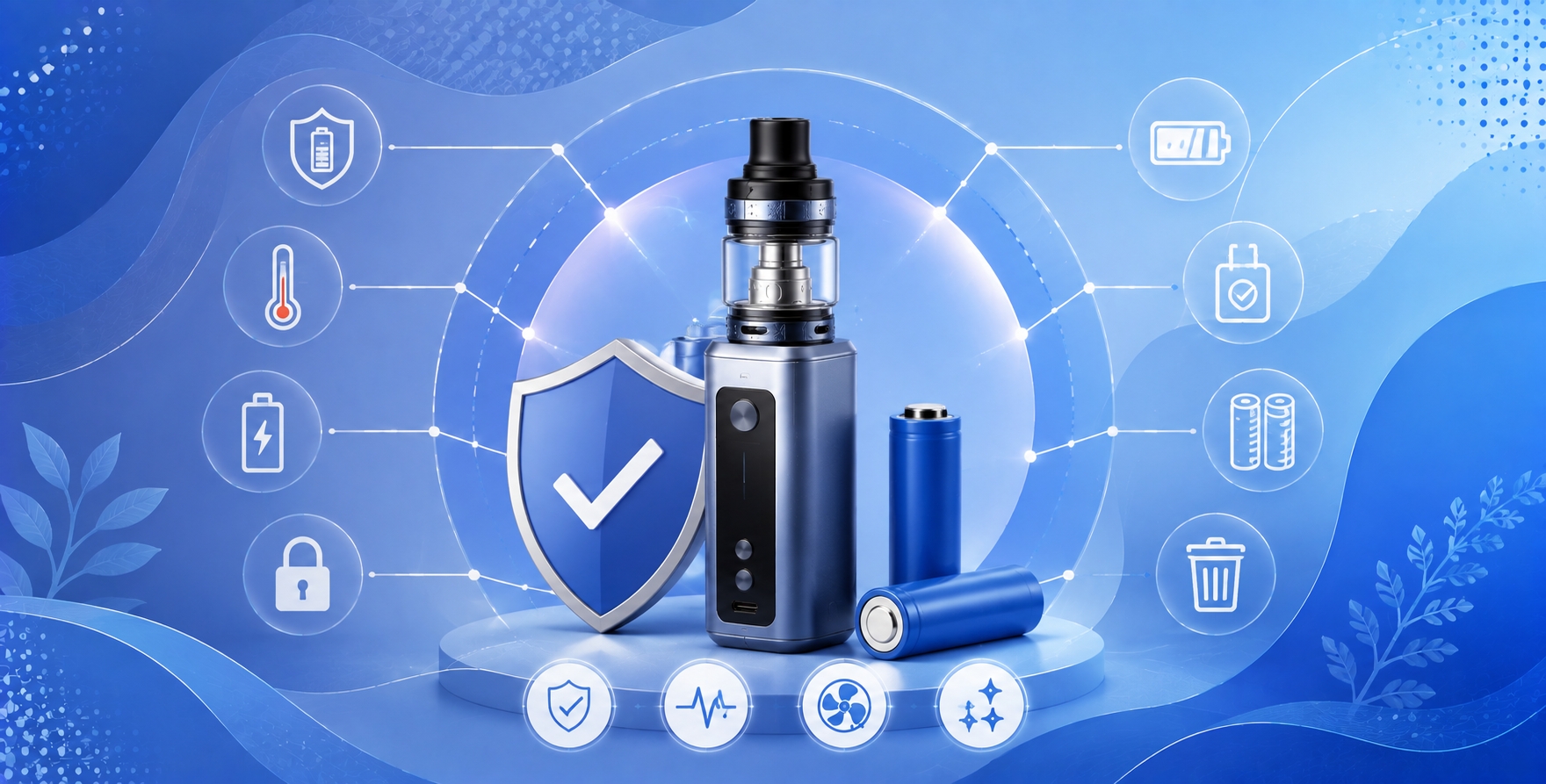
Battery safety information can vary by device, battery type, and manufacturer. Always follow the instructions and specifications supplied with your vaping device, battery, and charging equipment. Stop using batteries that are damaged, swollen, leaking, unusually hot, or otherwise behaving abnormally.
Your battery isn't just another component — it's the power source behind your device. Whether you're using a higher-powered mod or a compact pod system, proper battery handling can help maintain reliable performance while reducing avoidable risks associated with overheating, short circuits, battery damage, and fire.
Battery safety becomes especially important as power requirements increase. Coil resistance, wattage, battery condition, charging equipment, and everyday handling can all affect how safely a device operates. Understanding these basics is therefore an important part of responsible device maintenance.
Understanding Vape Batteries: Types and Differences
Not all vape batteries are interchangeable. Size, capacity, discharge capability, condition, and device compatibility all matter when selecting and using a battery.
Common Battery Types
- 18650 batteries: Rechargeable cylindrical lithium-ion cells commonly used in vaping devices with removable batteries.
- 20700 and 21700 batteries: Larger cylindrical cells found in some devices requiring different capacity or power characteristics.
- Built-in batteries: Non-removable batteries commonly used in compact devices and pod systems.
Battery capacity is only one consideration when choosing a device. Wattage, coil resistance, device efficiency, and frequency of use can all influence how long a battery lasts between charges.
What to Look for When Choosing a Battery
- Capacity (mAh): Indicates how much charge a battery can store. Higher capacity can provide longer runtime, although actual battery life depends heavily on the device and usage.
- Continuous discharge rating (CDR): Particularly important for removable cells because it relates to the continuous current a battery is designed to supply.
- Compatibility: Use the battery size and specifications recommended by the device manufacturer.
- Physical condition: Do not continue using batteries that are damaged, swollen, leaking, dented, or have compromised wraps.
For higher-powered or low-resistance setups, understanding Ohm's Law provides useful context because resistance, voltage, current, and wattage determine the electrical demands placed on a battery.
Common Battery Safety Mistakes
Many battery problems can be reduced through proper handling. Incompatible cells, damaged battery wraps, improper charging, extreme temperatures, and contact with metal objects can all introduce unnecessary risk.
Using an Incompatible Battery
A battery that physically fits inside a device is not automatically appropriate for it. Follow the battery specifications provided by the device manufacturer instead of choosing a cell based only on dimensions, capacity, or advertised performance.
Battery limits become particularly important with custom coil builds, where changing resistance can also change the amount of current required from the battery.
Carrying Loose Batteries
Loose removable batteries should not be carried unprotected in pockets or bags where their terminals could contact keys, coins, or other metal objects. The U.S. Food and Drug Administration (FDA) recommends storing loose batteries in a protective case to keep them away from metal objects that could cause a short circuit.
Exposing Batteries to Extreme Temperatures
Avoid leaving batteries or vaping devices in direct sunlight, hot vehicles, or other environments exposed to extreme temperatures. The U.S. Fire Administration (USFA) recommends protecting electronic cigarettes from extreme temperatures and following manufacturer storage instructions.
Proper Charging and Handling
Charging habits affect both battery safety and long-term device reliability. Always follow the charging method specified by the manufacturer rather than assuming that any cable or power adapter with a compatible connector is suitable.
The FDA recommends using the charger supplied with the device, while the USFA advises users not to charge electronic cigarettes with phone or tablet chargers unless permitted by the manufacturer. Both sources also advise against leaving devices charging unattended or overnight.
Charging should also be considered part of regular device maintenance. Keep charging ports clean and dry, inspect cables for visible damage, and stop using charging equipment that appears compromised.
Battery safety reminder: Never leave a vaping device charging unattended or overnight. Follow the manufacturer's charging instructions and stop charging immediately if the battery or device becomes unusually hot, swollen, damaged, or otherwise abnormal.
Check Batteries for Damage
Before using a removable battery, inspect it for signs of physical damage or abnormal behavior.
- Torn or damaged wraps
- Dents or deformation
- Swelling
- Leaking
- Unusual discoloration
- Excessive or unexplained heat
- Unusual odors or noises
Unexpected heat, inconsistent power, charging problems, or other unusual behavior can also be warning signs that the battery or another component needs attention.
How to Extend Battery Life
Good battery habits can help preserve performance over time. Avoid extreme temperatures, use compatible charging equipment, keep battery contacts and charging ports clean, and don't continue using cells that show physical damage or abnormal behavior.
Actual runtime depends on several factors rather than battery capacity alone. Higher wattage, lower coil resistance, frequent use, battery age, and device efficiency can all influence how quickly a battery is depleted.
Why Battery Quality and Compatibility Matter
Battery selection should be based on device compatibility, appropriate electrical specifications, physical condition, and reliable sourcing rather than price or advertised capacity alone.
The same principle applies to other vape accessories. Chargers and related components should be compatible with the device and used according to the manufacturer's instructions.
What to Do If a Battery Overheats
A device becoming unusually hot should not be ignored. Stop using or charging it and keep it away from combustible materials if it is safe to do so.
Heat can originate from several parts of a vaping device, including the battery, charging system, coil, airflow, or internal electronics. Persistent overheating issues should therefore be investigated before the device is used again.
The USFA identifies excessive heat, leaking, changes in shape, unusual odors, discoloration, and abnormal noises as warning signs associated with lithium-ion battery problems. If a battery is actively smoking, burning, or presenting an immediate fire hazard, move away from the area and contact emergency services rather than attempting to handle a failing cell yourself.
Dispose of Vape Batteries Properly
Lithium-ion batteries should not be placed in household trash or ordinary curbside recycling. The U.S. Environmental Protection Agency (EPA) warns that lithium batteries can become damaged during transportation or processing and potentially cause fires at waste and recycling facilities.
Used or damaged batteries should instead be taken to an appropriate battery collection point, electronics recycler, or household hazardous-waste facility according to local requirements.
Your Safety Starts with Smart Choices
Battery safety comes down to a few consistent habits: use the correct battery for the device, follow manufacturer charging instructions, protect removable cells from physical damage and metal objects, avoid extreme temperatures, and stop using batteries that show warning signs.
No lithium-ion battery-powered device is completely risk-free, but following manufacturer instructions and established battery-safety guidance can reduce preventable hazards while helping keep your device operating reliably.
Official Sources & Further Reading
- FDA — 5 Tips to Help Avoid "Vape" Battery Explosions
- U.S. Fire Administration — E-Cigarette Fire Safety
- EPA — How to Safely Dispose of E-Cigarettes
Last reviewed: September 2026. Battery specifications and manufacturer recommendations vary by device. Always follow the instructions supplied with your device, battery, and charging equipment, and replace or properly dispose of batteries showing signs of damage or abnormal behavior.