 United States
Vape Battery Safety Tips
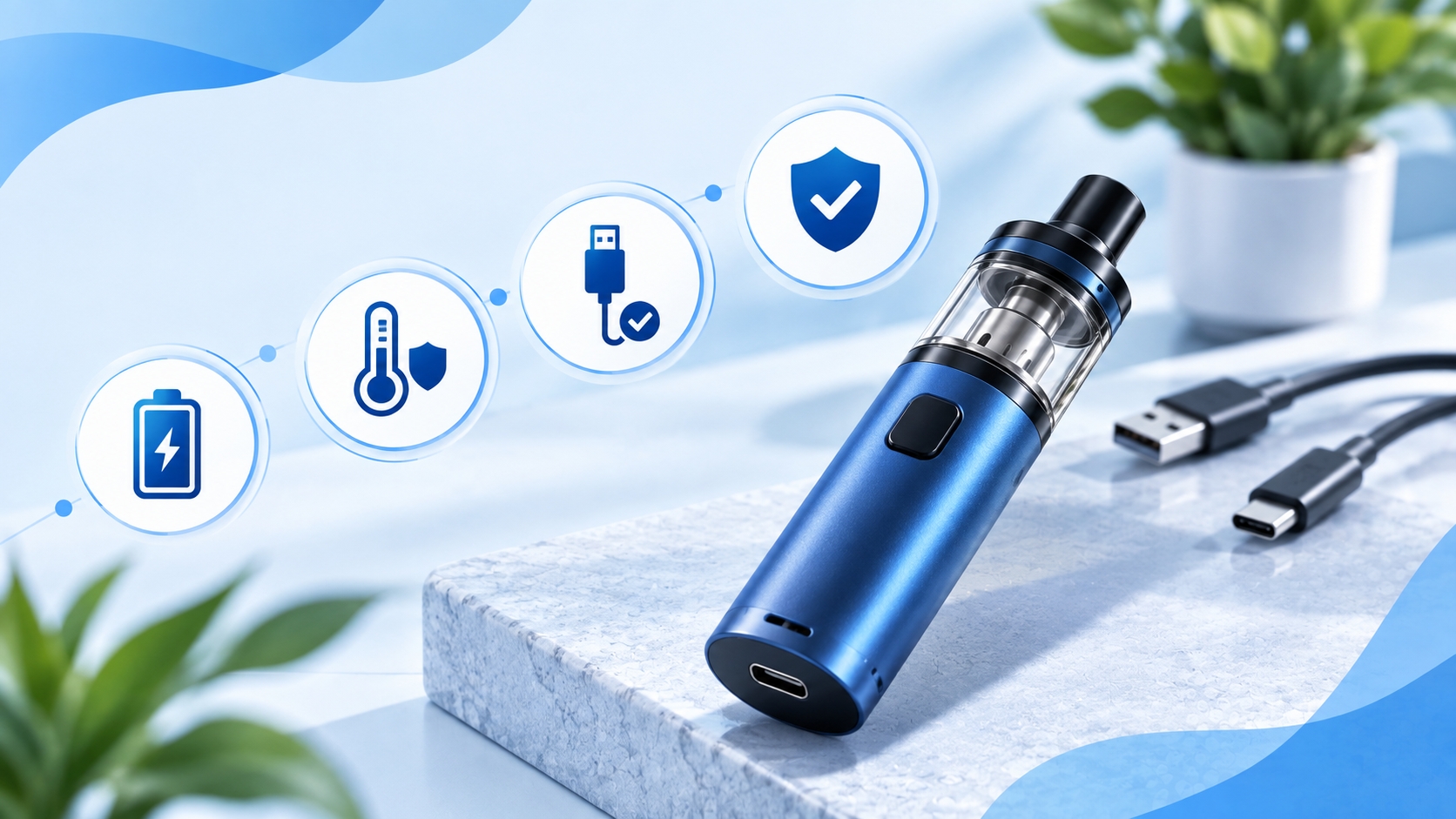
Battery requirements vary by device. Always follow the battery, charging, and storage instructions provided by your device manufacturer. Stop using a battery or device if you notice damage, swelling, leaking, unusual heat, discoloration, odor, or other abnormal behavior.
If you're new to vaping, battery care can be easy to overlook. The battery supplies the energy your device needs to operate, but like other products powered by lithium-ion cells, it requires proper charging, handling, and storage.
Battery-related incidents involving vaping devices appear to be uncommon, but the U.S. Food and Drug Administration (FDA) warns that vape fires and explosions can cause serious injuries. Understanding your device and following its manufacturer's battery instructions are therefore important parts of responsible battery care.
What Is a Vape Battery?
Vaping devices commonly rely on rechargeable lithium-ion batteries. Depending on the device, the battery may be built into the unit or removable and replaceable.
Built-in batteries are common in compact devices and pod systems, while some higher-powered devices use removable cylindrical cells such as 18650 or 21700 batteries. Battery size alone, however, does not determine compatibility.
Capacity, device power requirements, battery specifications, and expected runtime are all worth considering when choosing a device.
Choose the Correct Battery
If your device uses removable batteries, use only the battery type and specifications recommended by the manufacturer. A cell that physically fits inside the battery compartment is not automatically suitable for the device.
The FDA specifically recommends using batteries intended for the device and advises against mixing battery brands, different charge levels, or old and new batteries in multi-battery setups.
Battery specifications become especially important with low-resistance or higher-powered setups. Understanding Ohm's Law can help explain how resistance, voltage, current, and power interact and why battery limits matter.
Use the Recommended Charging Equipment
Charging equipment should match the requirements of your specific device. Do not assume that a cable or power adapter is appropriate simply because its connector fits.
The U.S. Fire Administration (USFA) advises against charging an e-cigarette with a phone or tablet charger, while FDA guidance emphasizes following the manufacturer's recommendations for properly handling and charging vape batteries.
Charging-port inspection can also be included in regular device maintenance. Keep the port clean and dry, inspect charging cables for visible damage, and stop using charging equipment that appears compromised.
Don't Leave Your Vape Charging Overnight
Avoid leaving a vaping device charging overnight or where you cannot monitor it. The USFA specifically recommends not charging e-cigarettes overnight, while the FDA recommends charging on a clean, flat surface away from materials that can easily catch fire and in a location where the device can be clearly seen.
Charging reminder: Follow the manufacturer's charging instructions, keep the device away from combustible materials while charging, and stop charging if you notice unusual heat, swelling, odor, leaking, or other abnormal behavior.
Use a Protective Battery Case
Removable batteries need additional protection when they're outside the device. Loose cells should not be carried in a pocket, bag, drawer, or other location where their terminals can contact keys, coins, or other conductive metal objects.
The USFA recommends storing loose e-cigarette batteries in a case and keeping them away from metal objects. A proper battery case protects the terminals and reduces the chance of an accidental short circuit.
Avoid Extreme Temperatures
Don't leave a vape or removable battery in direct sunlight, a hot vehicle, or other environments exposed to extreme temperatures. Cold conditions can also affect lithium-ion batteries.
The FDA recommends protecting vaping devices from extreme temperatures and specifically advises against leaving them in direct sunlight, a hot vehicle, or freezing conditions.
Heat can also originate inside the device rather than from the surrounding environment. Persistent overheating issues should be investigated before continuing to use or charge the device.
Store Batteries Safely
When a removable battery isn't being used, keep it in an appropriate protective case in a dry location away from direct sunlight, extreme temperatures, combustible materials, and metal objects.
Avoid simply placing loose cells inside ordinary plastic bags, pockets, or containers with other objects. The battery terminals need to be protected against accidental contact that could cause a short circuit.
Don't Use a Damaged Battery
Physical inspection is more useful for day-to-day safety than relying on a serial number alone. Stop using a removable battery if its wrap is torn, its casing is dented, or the cell shows swelling, leaking, excessive heat, discoloration, unusual odors, or other physical changes.
The USFA advises consumers to stop using lithium-ion batteries if they notice excessive heat, changes in shape or color, leaking, unusual odors, or odd noises.
Rapid battery drain, unexplained heat, inconsistent power, or charging problems can also be warning signs that the battery or another component requires attention.
Know When to Replace a Vape Battery
There isn't one universal replacement schedule that applies to every vape battery. Battery lifespan depends on the cell, charging cycles, operating conditions, usage, storage, and manufacturer recommendations.
What matters most is battery condition. A removable cell that is physically damaged, leaking, swollen, excessively hot, or otherwise behaving abnormally should be taken out of service rather than continuing to use it until a predetermined replacement date.
Be Careful With Multi-Battery Devices
Devices using more than one removable cell require additional attention. Follow the manufacturer's battery instructions and avoid mixing different battery brands, old and new cells, or batteries with substantially different charge levels.
Users working with rebuildable setups should also understand how coil resistance affects electrical demand before using a new build.
Dispose of Used Batteries Correctly
Vape batteries and devices containing lithium-ion cells should not simply be placed in household trash or ordinary curbside recycling.
The U.S. Environmental Protection Agency (EPA) warns that lithium-ion batteries can become damaged during waste handling and cause fires in garbage trucks, recycling facilities, and other waste-management environments.
Take used batteries and vaping devices containing lithium-ion cells to an appropriate battery collection point, electronics recycler, or household hazardous-waste facility according to local requirements.
Final Thoughts
Vape battery safety doesn't need to be complicated. Use the battery specified for your device, follow manufacturer charging instructions, protect loose cells from metal objects, avoid extreme temperatures, and regularly inspect batteries for physical damage or abnormal behavior.
Battery care also works alongside proper vape maintenance. Paying attention to charging ports, battery contacts, coils, and other components can help you recognize device problems before they become more serious.
If you're unsure whether a battery is compatible with your device or safe to continue using, consult the device or battery manufacturer rather than guessing.
Official Sources & Further Reading
- FDA — Tips to Help Avoid Vape Battery Fires or Explosions
- U.S. Fire Administration — E-Cigarette Fire Safety
- U.S. Fire Administration — Battery Fire Safety
- EPA — How to Safely Dispose of E-Cigarettes
Last reviewed: September 2026. Battery requirements vary by device and manufacturer. Always follow the specifications and charging instructions supplied with your equipment, and stop using batteries that show signs of physical damage or abnormal behavior.