 United States
Why Does My Vape Use E-Liquid So Fast? Common Causes Explained
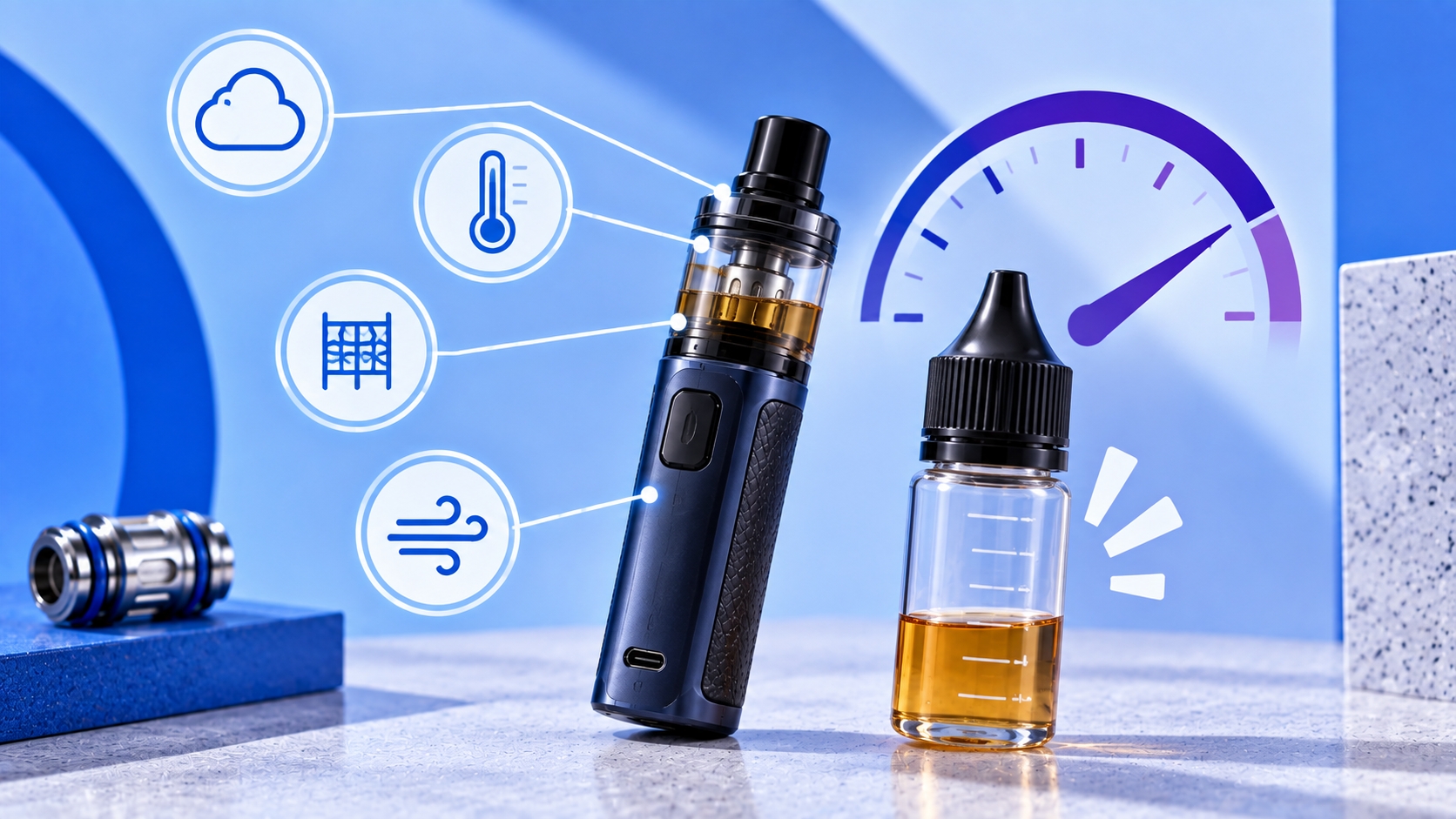
This guide is intended for adult users of legal purchasing age. E-liquid consumption varies by device, coil, power setting, airflow, and usage pattern. Follow the operating range and instructions provided for your exact hardware.
If your vape tank or pod seems to need refilling much sooner than expected, it doesn't necessarily mean something is wrong. Some setups naturally use more e-liquid because of the amount of power they deliver, the coil installed, the airflow configuration, or the way the device is used.
A sudden increase in consumption, however, can also point to a changed setting, a different coil, or e-liquid escaping from the device instead of being used normally.
Understanding what affects consumption can help you separate normal device behavior from something worth inspecting.
How Fast Should a Vape Use E-Liquid?
There is no universal amount of e-liquid that a vape should use per day. Two people can use similar devices and still refill at very different rates.
Consumption can be influenced by:
- Coil resistance and design
- Operating wattage
- Airflow
- Length and frequency of draws
- E-liquid composition
- Tank or pod design
- Leakage or flooding
For that reason, your own normal consumption is often a more useful reference point than comparing your setup with someone else's.
1. Your Wattage Is Higher
Higher-power operation is one of the most common reasons a refillable vape can consume e-liquid faster.
When a compatible coil is operated at a higher wattage within its manufacturer-specified range, more electrical power is supplied to the heating element. That can increase the amount of e-liquid vaporized during a draw compared with operating the same compatible setup at a lower power level.
If consumption increased after changing your settings, look at the wattage displayed on the device and compare it with the recommended range for the installed coil. Understanding the wattage display also helps distinguish the selected power setting from resistance, voltage, and other screen readings.
Do not reduce or increase power outside the manufacturer's recommended operating range simply to change e-liquid consumption.
2. Your Coil Is Designed for Higher-Power Use
Not all coils use e-liquid at the same rate. Coil construction, resistance, surface area, wicking, and intended operating range can all affect how much liquid the setup uses.
A coil designed for higher-power, higher-vapor operation can consume noticeably more liquid than a smaller coil intended for lower-power use.
This is why switching to a different coil can change consumption even when you continue using the same tank or device. Vape.com's selection of replacement coils includes different coil families and resistance options, each of which should be matched to the compatible hardware and manufacturer-specified operating range.
Resistance alone does not tell the entire story, so compare the exact coil model and recommended power range rather than assuming all coils with a similar ohm rating behave identically.
3. You're Taking Longer or More Frequent Draws
E-liquid consumption also depends on how frequently and how long the device is activated.
Longer draws keep the heating element active for more time, while more frequent draws increase the total number of heating cycles. Either can cause the reservoir level to fall faster.
Some devices display a puff counter or activation timer. These readings can help you compare your current usage pattern with what is normal for you, although puff count alone does not measure the exact amount of e-liquid consumed.
4. Your Airflow and Draw Style Have Changed
Airflow does not simply determine how airy or restricted a vape feels. It can also influence how the device is used.
A more open airflow configuration is commonly associated with setups designed for larger airflow and higher output. Users may also take longer or deeper draws with this style of setup, increasing the amount of e-liquid used during a session.
A tighter setup may operate differently, but airflow should be adjusted according to the tank, coil, and manufacturer's intended operating conditions rather than solely as a way to reduce liquid consumption.
5. You Changed to a Different Tank, Pod, or Device
Changing hardware can change your normal e-liquid consumption even when your usage routine feels the same.
A different tank or pod may use another coil platform, airflow design, resistance range, or power level. Moving from a compact low-power setup to a larger higher-output system can therefore make the reservoir appear to empty much faster.
The internal design of vape tanks can vary considerably, so reservoir capacity alone doesn't determine how long a fill will last.
If the change started immediately after switching hardware, compare the specifications of the old and new setups before assuming the new device has a problem.
6. Your E-Liquid Has a Different VG/PG Ratio
E-liquids can differ in viscosity because of their vegetable glycerin (VG) and propylene glycol (PG) proportions. Hardware is often designed around particular types of liquid and wicking conditions.
Changing the liquid can therefore change how a setup wicks and performs, although VG/PG ratio should not be treated as the only explanation for higher consumption.
The relationship between liquid composition and hardware is covered more specifically through VG/PG ratios, including how different ratios interact with different styles of vaping equipment.
7. E-Liquid May Be Leaking From the Device
If the reservoir level is dropping faster than normal but your usage hasn't increased, inspect the device for signs that some of the liquid is escaping rather than being vaporized.
Possible signs include:
- Visible liquid around the tank or pod
- Liquid around airflow openings
- Moisture collecting around the device connection
- A reservoir level that drops noticeably while the device is sitting unused
Damaged seals, incorrect assembly, filling issues, coil installation, and other factors can contribute to tank leaking, making it important to distinguish lost liquid from normal consumption.
8. The Coil May Not Be Installed or Seated Correctly
On tanks and pods that use replaceable coils, the coil often forms part of the liquid-sealing system. If it is not installed according to the manufacturer's instructions, liquid may move through areas where it normally should not.
If unusually fast liquid loss begins immediately after a coil change, check that the installed coil is the correct model and that it is seated as specified by the manufacturer.
Compatibility matters here as well. Two coils can appear similar or share the same resistance while belonging to different hardware families, so the exact coil series should match the tank or pod it was designed for.
9. Your Tank or Pod Has Physical Damage
Cracks, damaged seals, warped cartridges, or other physical damage can allow e-liquid to escape.
Inspect accessible parts of the reservoir, fill-port closure, O-rings, and connection areas according to the manufacturer's instructions. If a component is visibly damaged, replacing the correct compatible part is generally more appropriate than trying to compensate for the leak through settings.
For pod systems, cracked cartridges, damaged fill seals, and persistent cartridge-related leaks can also be signs that the vape pod needs replacing rather than simply refilling.
Normal Consumption vs. Possible E-Liquid Loss
| What You Notice | Possible Explanation |
|---|---|
| Consumption increased after raising wattage | Higher power may be vaporizing more liquid per draw |
| Consumption changed after installing a different coil | Different coil design or operating range |
| You are taking longer or more frequent draws | More total activation time |
| Reservoir drops while the device is unused | Inspect for possible leakage |
| Liquid appears around the tank, pod, or airflow | Possible leaking or flooding |
| Consumption increased after changing devices | Different coil, power, airflow, or hardware design |
How to Figure Out Why Your Vape Is Using More E-Liquid
If consumption suddenly changes, look at what changed around the same time rather than adjusting several things at once.
- Check the reservoir for leaks. Look for visible liquid around the tank, pod, airflow, and accessible connections.
- Check your current wattage. Compare it with the manufacturer's recommended range for the installed coil.
- Identify the exact coil. Confirm its resistance, coil family, and intended operating range.
- Think about recent hardware changes. A different coil, pod, tank, or device can change normal consumption.
- Consider your usage pattern. Longer or more frequent draws naturally increase total activation time.
- Check the manufacturer's instructions. Make sure the tank, pod, coil, and settings are being used as intended.
Should You Be Concerned If Your Vape Uses More Juice?
Higher consumption by itself does not automatically indicate a faulty device. It may simply reflect a higher-power coil, different hardware, increased usage, or another normal change in the setup.
A sudden unexplained increase deserves more attention when it appears alongside visible leaking, physical damage, unusual heating, repeated device warnings, or another significant change in normal operation.
If the hardware appears damaged or behaves outside the conditions described by the manufacturer, stop using it until the cause is identified rather than continuing to compensate through power or airflow adjustments.
Bottom Line
A vape can use e-liquid faster because of higher wattage, a different coil, longer or more frequent draws, airflow and usage style, different hardware, or the characteristics of the liquid itself.
But not every falling reservoir level represents normal consumption. Leakage, damaged components, or an incorrectly installed coil can also make e-liquid disappear faster than expected.
If your consumption suddenly changes, compare the device's current setup with what you normally use. Checking the coil, wattage, reservoir, seals, and recent hardware changes one at a time can usually narrow down whether the difference comes from normal operation or unwanted liquid loss.
E-liquid consumption varies considerably between devices and usage patterns. Keep your hardware within the manufacturer's specified operating range, use compatible replacement components, and stop using visibly damaged or abnormally behaving hardware until the cause is identified.