 United States
5 Warning Signs Your Vape Device Is Failing (And How to Fix It)
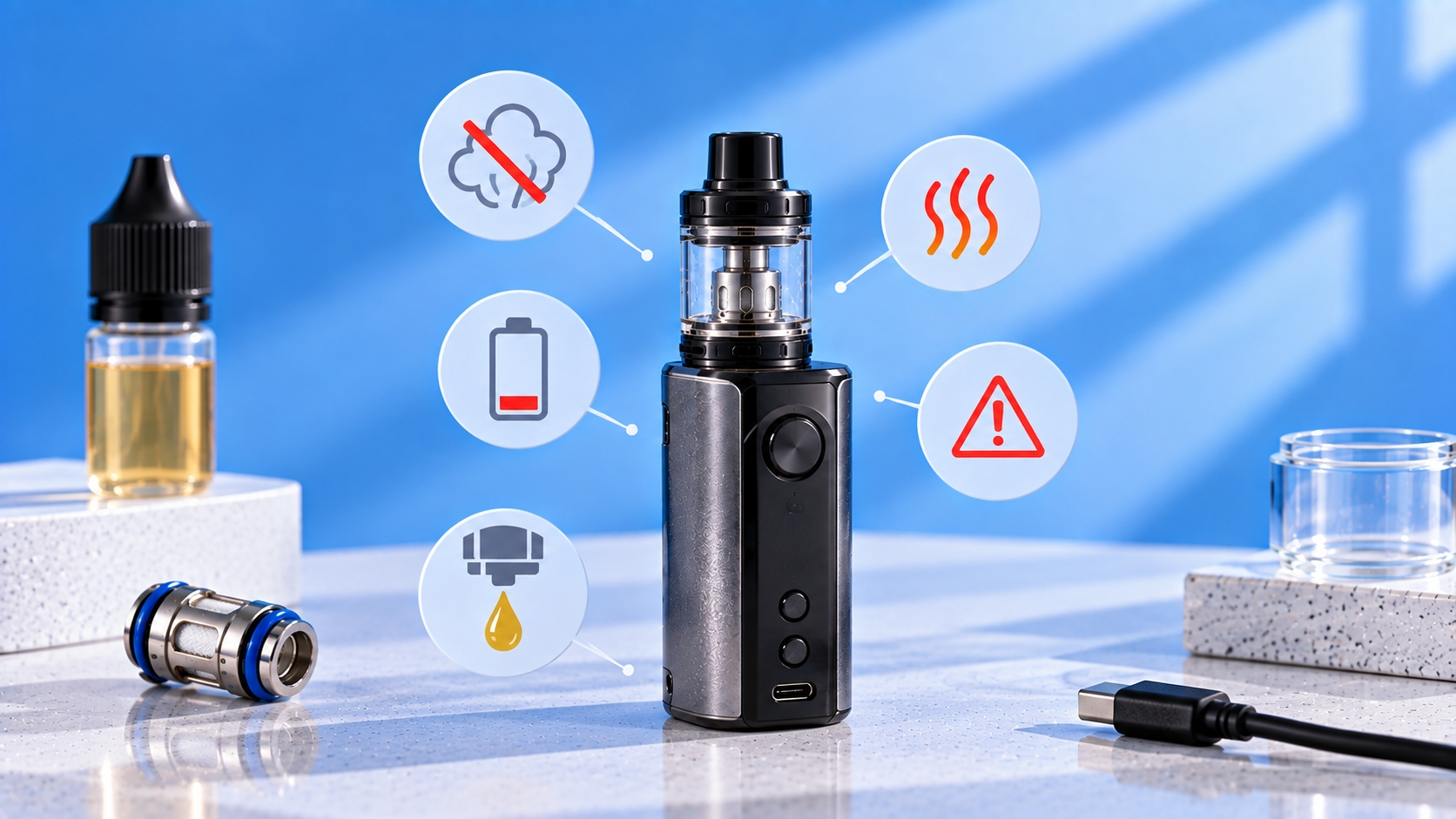
Different vape devices use different batteries, chipsets, coils, sensors, charging systems, and safety features. Use this guide to identify the type of problem you're experiencing, then follow the manufacturer's instructions and the relevant symptom-specific troubleshooting guidance.
A vape suddenly producing less vapor, leaking, overheating, tasting burnt, failing to recognize a coil, or activating unexpectedly does not necessarily have one underlying cause. The same symptom can result from different components depending on the device.
Instead of treating every problem as a sign that the entire vape has failed, start by identifying the symptom. Some issues involve routine maintenance or replaceable components, while others—particularly unexpected activation, battery damage, or excessive heat—are reasons to stop using the device.
Warning Signs Your Vape Needs Attention
| Symptom | Possible Area to Check | Initial Action |
|---|---|---|
| Weak or no vapor | Battery, coil, connection, power setting, or e-liquid supply | Check device status and manufacturer instructions |
| Device won't charge | Cable, charger, charging port, battery, or internal electronics | Stop if there is heat or visible battery damage |
| Leaking | Tank, pod, coil installation, seals, filling, or condensation | Identify where the liquid is coming from |
| Burnt or dry taste | Wick saturation, coil condition, power, or e-liquid supply | Stop repeated firing and check saturation |
| Unusual heat | Coil, battery, charging system, power setting, or electronics | Stop using the device if heat is excessive or abnormal |
| Auto-firing | Button, sensor, liquid intrusion, chipset, or electronics | Stop using the device |
1. Weak or No Vapor
Reduced vapor production can involve several parts of the setup. Before assuming the device itself has failed, check whether it is powered on and charged, whether the coil or pod is installed correctly, whether sufficient e-liquid is available, and whether the device displays an error message.
Coil condition can also affect performance. There is no universal replacement schedule because coil life varies with the coil, e-liquid, power, usage pattern, and device. Performance changes and other replacement signals are more useful than automatically replacing a coil after a fixed number of days.
2. Charging or Battery Problems
Charging failure, rapid battery drain, failure to power on, and abnormal battery behavior should be distinguished from one another. A device that simply does not charge can have a different problem from one that becomes excessively hot while charging.
Check the manufacturer's charging instructions and use the charging equipment specified or recommended for the device. If the battery is swollen, leaking, unusually hot, physically damaged, or producing an abnormal odor, stop using it rather than continuing charging tests.
Battery handling, charging precautions, storage, and physical battery warning signs are covered in the dedicated battery safety guide.
3. Leaking E-Liquid
Liquid around a tank or pod does not automatically mean the entire device is failing. Possible causes include seals, coil installation, filling technique, condensation, component damage, and the specific tank or pod design.
Start by identifying where the liquid appears rather than immediately disassembling the entire device. Persistent tank leakage can be diagnosed more systematically using the dedicated leak guide.
4. Burnt Taste or Dry Hits
A harsh or burnt-tasting puff can involve insufficient wick saturation, low e-liquid, power settings, repeated use, e-liquid viscosity, or coil condition. It does not automatically mean the entire vape has failed.
If the problem appears suddenly, stop repeatedly firing the device and check the e-liquid supply and coil operating conditions. The dedicated dry hit guide covers wick-saturation troubleshooting, while persistent burnt flavor may indicate a different coil problem.
5. Gurgling, Popping, or Spitting
Some sound during operation can be normal, so noise alone does not prove that a device is faulty. Persistent gurgling or liquid reaching the mouthpiece, however, can point toward excess liquid around the coil or airflow path.
Check the manufacturer's instructions before attempting device-specific clearing procedures. Avoid assuming that every tank should be blown through, flicked, or disassembled in the same way.
6. “No Atomizer” or Coil Detection Errors
If a regulated device reports that it cannot detect the atomizer or coil, possible causes include coil installation, connection problems, incompatible components, damaged contacts, or an internal fault.
Power the device off before inspecting user-accessible connections and confirm that the installed coil or tank is compatible with the device. Do not open sealed electronics to investigate a persistent detection error.
7. Device Overheating
Vape components can become warm during operation, but excessive, rapidly increasing, or unexplained heat deserves more attention. The source may involve the coil area, battery, charging system, operating conditions, or internal electronics.
Stop using or charging a device that becomes abnormally hot, especially if heat appears alongside swelling, leaking, physical damage, unusual odors, or abnormal operation.
8. Auto-Firing or Unexpected Activation
A heating coil activating without intentional input is not normal operation. Possible causes can involve a stuck fire button, activation sensor, liquid or condensation around accessible areas, or an internal electronic problem.
Do not repeatedly test a device that continues firing unexpectedly. Stop using it and follow the more specific auto-firing guide for appropriate next steps.
Stop-use warning: Stop using a vape if it activates unexpectedly, becomes excessively hot, has a swollen or leaking battery, produces an unusual chemical or burning odor, shows significant physical damage, or continues behaving abnormally after basic manufacturer-approved checks.
Basic Troubleshooting: What to Check First
For problems that do not involve overheating, battery damage, smoke, unexpected activation, or another immediate warning sign, a few basic checks can help identify the affected area.
- Check the device display or indicator lights. Look for an error message or warning pattern and compare it with the manual.
- Check the power source. Confirm the device has sufficient charge and follow its specified charging procedure.
- Check the pod, tank, or coil. Make sure user-removable components are installed according to the manufacturer's instructions.
- Check the e-liquid supply. Low liquid can contribute to wicking and performance problems.
- Inspect accessible areas. Look for leaking, condensation, debris, damaged seals, or visible physical damage without opening sealed electronics.
- Consult the manufacturer. Device-specific error codes and procedures should take priority over generic troubleshooting advice.
When Troubleshooting Should Stop
Not every malfunction is appropriate for continued DIY troubleshooting. Stop using the device and consult the manufacturer or appropriate technical support when:
- The device repeatedly activates without intentional input.
- The battery is swollen, leaking, dented, unusually hot, or otherwise damaged.
- The device becomes excessively or unexpectedly hot.
- There is smoke, an unusual chemical or burning odor, or visible internal damage.
- A charging problem is accompanied by abnormal heat or battery behavior.
- The device was significantly dropped, crushed, or exposed to liquid and now behaves abnormally.
- The same malfunction returns after manufacturer-approved basic troubleshooting.
Opening, modifying, or attempting to repair sealed battery compartments, chipsets, wiring, or other internal electronics should not be treated as routine troubleshooting unless the manufacturer specifically provides a user-serviceable procedure.
Preventing Common Device Problems
Routine maintenance can help keep user-serviceable components clean and make developing problems easier to identify, but maintenance procedures vary by device.
The broader device maintenance guide covers tank and pod care, coil maintenance, accessible contacts, charging practices, and storage without turning this troubleshooting hub into another maintenance article.
Frequently Asked Questions
Why is my vape suddenly not working?
Start with the symptom rather than assuming one cause. Check the device indicators, charge state, pod or tank installation, coil connection, e-liquid supply, and manufacturer troubleshooting information. Stop if the device also shows abnormal heat, battery damage, or unexpected activation.
Does weak vapor mean my vape is failing?
Not necessarily. Weak vapor can involve charge level, coil condition, e-liquid supply, settings, connections, or other device-specific factors. It should be diagnosed before concluding that the entire device has failed.
When should I stop using a malfunctioning vape?
Unexpected firing, excessive heat, battery swelling or leaking, smoke, unusual odors, serious physical damage, and persistent abnormal operation are reasons to stop use rather than repeatedly testing the device.
Can I repair a vape myself?
Routine user-serviceable tasks depend on the device, but sealed batteries, wiring, chipsets, and internal electronics should not be opened or modified unless the manufacturer specifically provides a procedure intended for the user.
The Bottom Line
A vape behaving abnormally does not always mean the whole device has failed. Start by identifying the symptom, checking user-serviceable components and manufacturer guidance, and then use the appropriate symptom-specific troubleshooting procedure.
Problems involving unexpected activation, excessive heat, damaged batteries, smoke, unusual odors, or significant physical damage should be treated differently from routine issues such as a worn coil or leaking tank. In those situations, stop using the device rather than continuing to test it.
Official Sources & Further Reading
- FDA — Tips to Help Avoid Vape Battery Fires or Explosions
- U.S. Fire Administration — Battery Fire Safety
Last reviewed: September 2026. Troubleshooting procedures and error indicators vary by device. Follow the manufacturer's instructions for your specific model and stop using equipment that shows serious battery, heat, activation, or physical-damage warning signs.